Fan Ejected After Basketball Hits NBA Referee
Fan Ejected After Basketball Hits NBA Referee: What Happened and How the Lakers Incident Fits In
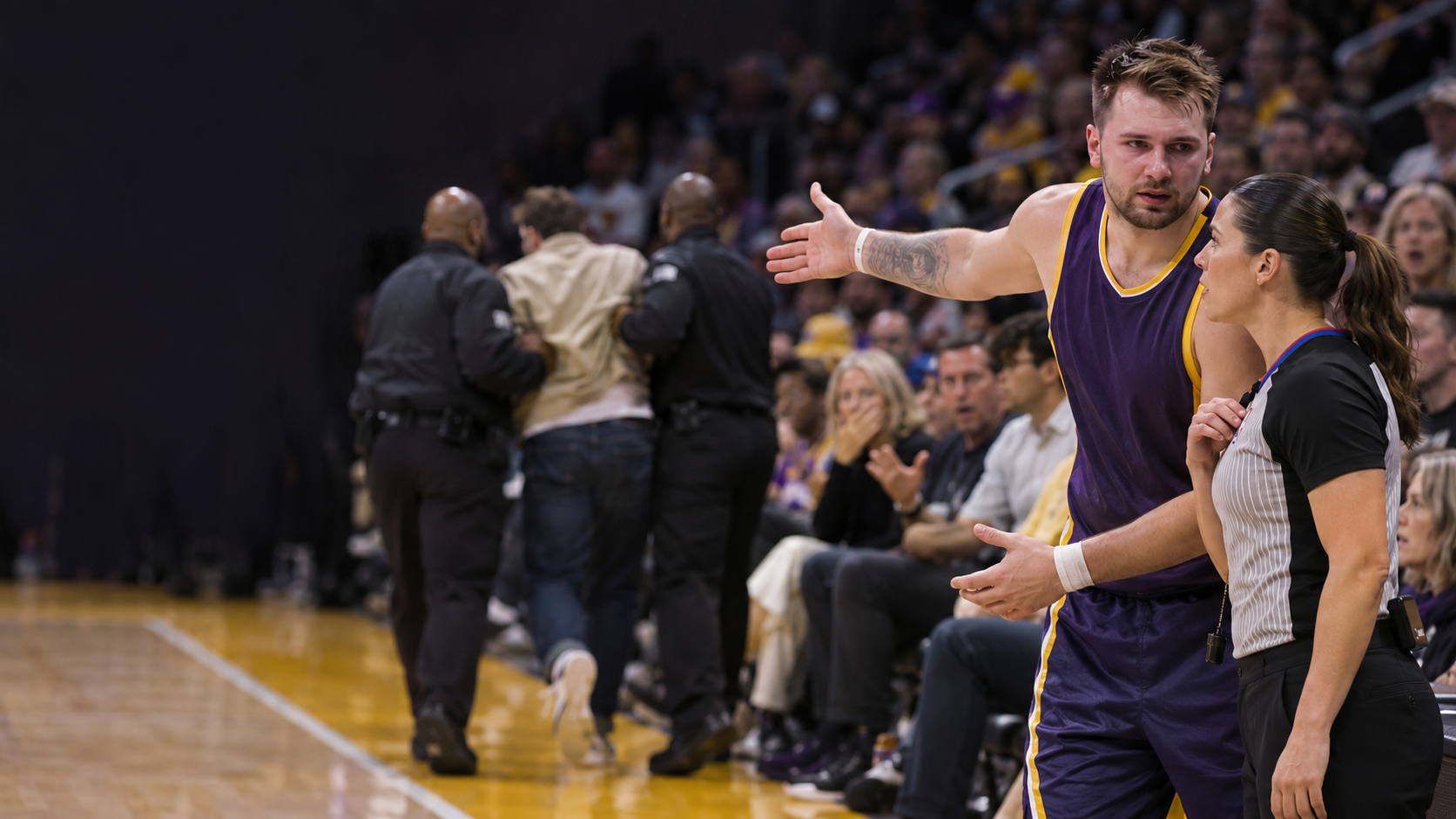
A fan was reportedly ejected from an NBA game after a basketball struck a female referee. The incident drew attention because related coverage also mentioned an emotional reaction by a Lakers player and a separate courtside removal involving Luka Dončić during a Lakers victory over the Sacramento Kings.
The available summaries do not establish that these events occurred during the same game. They also do not confirm the referee’s identity, the fan’s intent, whether anyone was injured, or whether additional punishment followed the ejection.
That distinction matters. Viral sports coverage can combine separate incidents into one dramatic narrative. Based on the available material, the confirmed account is limited to a reported fan ejection after a basketball hit an official. A separate report describes a courtside spectator being removed during a Lakers-Kings game. Further details require verification from original reports, game footage, arena statements, and official NBA records.
What Happened When the Basketball Hit the Referee?
The central report says a fan was ejected after a basketball struck a female NBA referee. A Fox News report also reportedly connected the incident with an emotional reaction by a Lakers star Source 1.
The summary does not explain how the ball reached the referee. It does not say whether a spectator threw it, whether it deflected toward the official, or whether the contact occurred during another disruption. It also does not establish whether the contact was intentional.
Those distinctions affect the seriousness of the event. A deliberate act directed at an official presents a different safety and disciplinary issue from an accidental deflection. A ball thrown during an argument or emotional outburst could also raise questions about intent, escalation, and compliance with arena rules.
The available information supports only the reported outcome: the spectator was ejected after the basketball struck the official. It does not support a definitive claim about motive.
The Referee’s Identity Remains Unconfirmed
The referee’s name, officiating crew, and game assignment should be confirmed before publication. Referring to the official only as a “female referee” provides limited context and can create confusion with unrelated incidents involving NBA or WNBA officials.
Accurate identification distinguishes this event from other cases, helps readers locate the official game report, and recognizes the referee’s professional role rather than reducing the story to a gender-based description.
The supplied summary does not identify the official. No claim about her identity, injury status, or continued participation in the game should be presented as confirmed without a reliable source.
What Does the Ejection Establish?
Arena security typically responds quickly when spectator conduct creates a risk near the court. Personnel may remove the fan, separate the individual from players and officials, and preserve video or witness evidence.
The removal itself does not establish criminal liability, a league violation, or a permanent arena ban. Ejection is an immediate venue response. Further consequences depend on the facts, arena policy, the conduct involved, and any investigation by local authorities or the league.
The supplied material does not confirm whether the fan received a ban, lost ticket privileges, faced charges, or received any other penalty.
The Lakers-Kings Incident May Be Separate
A separate report says that, during a Lakers win over the Kings, Luka Dončić was connected with the removal of a courtside fan after an incident involving an official Source 5.
The summary does not provide the game date, final score, venue, official’s identity, or the precise behavior that led to the spectator’s removal. It also does not prove that Dončić personally ordered the ejection.
The wording could mean that Dončić alerted officials or arena security, reacted to conduct directed at an official, or witnessed a situation that staff handled independently. Those possibilities should not be treated as identical. The original article and available video are needed to establish the sequence.
Dončić Should Not Be Automatically Linked to the Referee-Contact Report
The first source refers generally to a Lakers star’s emotional reaction but does not identify the player in the supplied summary. The fifth source specifically names Luka Dončić in connection with a courtside fan removal during a Lakers-Kings game.
That difference prevents a reliable conclusion that Dončić was the player mentioned in the first report or that both reports describe one event. The incidents may involve different games, officials, spectators, and circumstances.
Loaded descriptions such as “tantrum” should be avoided unless they appear in a clearly attributed quotation. A neutral account can describe visible frustration, gestures, an argument with officials, or a request for security intervention. It should not infer a player’s mental state from a short clip or headline.
The available summaries do not confirm whether Dončić received a technical foul, whether the incident affected play, or whether the NBA issued a disciplinary response.
Why Courtside Incidents Receive Immediate Attention
Courtside spectators sit close to the playing surface, giving them unusual access to players, coaches, referees, and live action. A disruptive spectator may speak directly to an official, interfere with a player’s movement, throw an object, or escalate a verbal exchange before security can intervene.
Physical contact with an official is especially serious because referees must move around the court without intimidation or interference. Any object that reaches the playing area can affect the game and people nearby.
Security teams generally focus on protecting players, coaches, officials, staff, and spectators. Their response may include:
- Identifying the person involved.
- Separating the spectator from the court.
- Removing the individual from the arena.
- Preserving surveillance and broadcast footage.
- Interviewing witnesses.
- Coordinating with team, league, or local authorities.
Most professional basketball venues prohibit spectators from touching players or officials, throwing objects, entering restricted areas, threatening personnel, or refusing security instructions. Fans may also be removed for abusive, discriminatory, or disruptive conduct.
A courtside ticket provides access to a designated seat under venue conditions. It does not give a spectator unrestricted access to participants or permission to interfere with the game.
Possible Consequences for Fan Misconduct
Ejection is often the first visible consequence because it removes the immediate risk. Depending on the evidence and applicable law, additional consequences could include an arena ban, ticket cancellation, loss of season-ticket privileges, civil claims, or a police investigation.
A person could face criminal charges if authorities determine that the conduct violated local law. However, ejection alone does not prove that any of those outcomes occurred.
The supplied summaries do not report an NBA statement, team statement, arena ban, police action, or court case connected to the referee-contact incident. Those details should remain unconfirmed until supported by original reporting or official records.
Several forms of evidence could clarify what happened:
- National broadcast footage.
- Arena surveillance video.
- Mobile-phone recordings.
- Statements from officials.
- Player and coach accounts.
- Security reports.
- Witness interviews.
- Police or venue records.
Full footage matters because a short clip may show only the moment of contact. A wider view could reveal what happened beforehand, whether the fan acted deliberately, and how security responded afterward.
Confirmed Information and Unresolved Claims
The supplied material supports these limited statements:
- A fan was reportedly ejected after a basketball hit a female NBA referee, according to the first report Source 1.
- Another report describes a courtside fan being removed during a Lakers win over the Kings Source 5.
- The first summary mentions an unidentified Lakers star’s emotional reaction.
- The fifth summary mentions Luka Dončić in connection with the Lakers-Kings fan removal.
The following facts remain unresolved:
- The referee’s name and officiating crew.
- The game date, arena, and teams involved in the referee-contact incident.
- Whether the ball was thrown intentionally.
- Whether the referee suffered an injury.
- Whether the official continued working the game.
- The identity of the Lakers star in the first report.
- Whether the two incidents occurred during the same game.
- Whether Dončić caused, requested, witnessed, or merely reacted to the ejection.
- Whether any technical foul, league review, arena ban, or criminal investigation followed.
The unrelated source summaries do not fill those gaps. Sources 3 and 7 concern Victor Wembanyama’s 50-point, 20-rebound performance and do not support the fan-ejection story Source 3. Sources 2, 4, 6, 8, and 10 provide no relevant evidence. The A’ja Wilson report concerns a separate WNBA matter and cannot establish what happened in this NBA case Source 9.
Broader Context
The WNBA report involving A’ja Wilson and a fan during a game against the Indiana Fever may provide general context, but it should not be presented as evidence about the NBA incident. The NBA and WNBA may apply different policies, investigative processes, and disciplinary standards Source 9.
Short viral videos may omit the exchange before an incident, the exact point of contact, security instructions, or the response from players and officials. Reporting should separate:
- What video visibly shows.
- What witnesses or publications claim.
- What the NBA, arena, team, or authorities confirm.
Neutral descriptions are more reliable than sensational terms such as “tantrum,” “meltdown,” or “attack” unless those terms are clearly attributed. A report can describe visible frustration, a spectator’s removal, or an object striking an official without inferring motive or mental state.
Reporting Checklist
Before publication, reporters should verify:
- The original publication date and full article connected to Source 1.
- Whether Source 1 and Source 5 describe the same game.
- The referee’s identity and crew assignment.
- The player named in each report.
- The game date, arena, teams, and final score.
- Video from multiple angles.
- Statements from the NBA, arena, relevant team, and officiating operations.
- Any police or local-authority involvement.
- Any technical foul, suspension, ban, or other disciplinary action.
Until those facts are confirmed, allegations should remain attributed and qualified. Claims about intent, injury, criminality, or player misconduct require direct evidence.
Conclusion
The reported ejection followed an incident in which a basketball struck a female NBA referee. That conduct warranted an immediate security response, but the available summaries do not establish the ball’s trajectory, the fan’s intent, the referee’s condition, or any further punishment.
The supplied material also appears to combine that report with a separate Lakers-Kings incident involving a courtside spectator and Luka Dončić. Those events should not be merged without confirmation.
Accurate reporting requires identifying the game, referee, player, spectator, sequence of events, and disciplinary outcome. Courtside access is part of the live basketball experience, but safety, respect for officials, and compliance with arena rules remain essential.
FAQ
Why was the fan ejected from the NBA game?
The available report says the fan was removed after a basketball hit a female referee. The full game report must establish whether the contact was deliberate, accidental, or connected to another disruption.
Was Luka Dončić involved in the referee-contact incident?
The available summaries do not establish that. A separate report links Dončić to the removal of a courtside fan during a Lakers win over the Kings. The two incidents should not be treated as identical without confirmation.
Did the Lakers star receive a technical foul or other punishment?
The supplied summaries do not provide that information. The official box score, referee report, team statement, and any NBA announcement should be checked before making that claim.
Can a fan face more than ejection for contacting an official?
Yes. Depending on the facts and local law, consequences may include an arena ban, ticket restrictions, civil action, or a police investigation. Ejection alone does not prove that additional penalties occurred.
Why are courtside fans removed so quickly?
Courtside spectators are close to players and officials. Disruptive conduct can create an immediate safety risk, so security may remove a fan to prevent further contact, threats, or interference with play.
Are the WNBA and NBA fan incidents connected?
No connection is established by the available material. The A’ja Wilson report concerns a separate WNBA incident and provides only general comparison, not evidence about the NBA case Source 9.