Juan Atkins, Detroit Techno Pioneer, Dies at 64
Juan Atkins, Detroit Techno Pioneer, Dies at 64
Juan Atkins, a pioneering Detroit techno musician, producer and DJ, has died at 64, according to reports from The Guardian, the Detroit Free Press, Resident Advisor and Rolling Stone.
Atkins was one of the principal architects of Detroit techno and a member of the Belleville Three, the influential trio formed with Derrick May and Kevin Saunderson. His music connected Detroit’s industrial identity, Black musical innovation, futuristic ideas and club culture. The sound he helped develop later became a global language, influencing producers, DJs, festivals and electronic scenes far beyond Michigan.
The available reports confirm Atkins’s age and musical importance but do not provide a verified cause of death, precise date or location of death, funeral information or a complete family statement. Those details should not be reported as fact without confirmation from an official representative or authoritative publication.
Who Was Juan Atkins?
Juan Atkins was a Detroit electronic musician, producer and DJ whose work helped establish the foundations of techno. He did not simply perform within an existing genre; he helped define its sound, vocabulary and artistic possibilities.
His music centered on programmed rhythms, synthesizers, drum machines, sequenced patterns and futuristic concepts. Atkins treated technology as a creative instrument rather than a substitute for musical expression. His rhythms could sound precise and machine-driven while remaining designed for bodies in motion.
Atkins developed his career within Detroit’s distinctive musical environment, shaped by industrial manufacturing, radio experimentation, soul, funk, disco and a strong tradition of Black musical creativity. He drew from that environment while also engaging with electronic and experimental music from abroad.
Detroit techno emerged through a gradual exchange of ideas rather than a single recording or isolated invention. Atkins was one of the artists who transformed those ideas into a coherent musical direction, demonstrating that electronic music could carry a strong sense of place while imagining a future beyond familiar pop and rock structures.
Detroit’s Role in Techno History
Detroit techno developed through the meeting of local culture and international influence. Its creators absorbed elements of funk, disco and soul while exploring European electronic music, futuristic imagery and new studio technology.
Unlike a conventional band arrangement, early techno often placed rhythm programming and electronic texture at the center. Repetition became a compositional tool. A track could develop through small changes in timbre, rhythm, harmony and density instead of relying on verses, choruses or prominent lyrics.
That structure gave Detroit techno a distinctive identity. Its music could be minimal without being empty and repetitive without becoming static. Each layer contributed to a sense of movement, atmosphere and anticipation.
Atkins helped define this approach. His work showed how a producer could use machines to create music that was both functional on a dance floor and rich in ideas. Detroit techno sounded connected to the city’s industrial landscape, but it was not reducible to machinery. It also expressed imagination, community and artistic independence.
The Belleville Three
Juan Atkins, Derrick May and Kevin Saunderson are widely known as the Belleville Three. The name refers to their association with Belleville, Michigan, and their formative role in the development of Detroit techno. Resident Advisor identifies Atkins as a member of the group and describes the trio’s importance to the genre’s international influence.
The Belleville Three were important both collectively and individually. Their shared ideas helped establish a distinct Detroit sound, while their separate careers expanded techno in different directions.
Their contribution involved more than individual tracks. They helped build a musical culture around electronic production, DJ performance and independent experimentation. Their work presented Detroit as a major center of electronic music at a time when many listeners associated technological innovation with Europe or established pop studios.
Their sound combined:
- Programmed, machine-led rhythms.
- Repeating patterns that developed gradually.
- Synthesizer-based melodies and textures.
- A strong relationship with clubs and DJs.
- Futuristic themes connected to technology and urban life.
- Structures that valued atmosphere as much as conventional hooks.
The Belleville Three did not create Detroit techno in isolation. Other Detroit artists, DJs and communities were essential to the genre’s growth. However, Atkins, May and Saunderson became its most recognizable founding figures, helping give Detroit techno an identity audiences could recognize worldwide.
Atkins’s Futuristic Musical Vision
Atkins became known for presenting the future through sound. Synthetic tones, programmed rhythms, spacious arrangements and repeating sequences created an atmosphere that felt unfamiliar yet purposeful.
His futurism was more than an aesthetic preference. It reflected a belief that electronic technology could expand the possibilities of composition. A synthesizer or drum machine could produce new textures, rhythmic structures and ways of organizing time rather than merely imitate traditional instruments.
Atkins’s work also challenged the idea that dance music had to be musically simple. Repetition allowed listeners to focus on subtle changes. A bass pattern could gain power through its placement, while a small shift in a sequence could alter the mood of an entire passage. Sparse arrangements created space for the listener’s imagination.
That balance made Detroit techno both accessible and challenging. The music could function in a club, where rhythm and momentum mattered, while also rewarding close listening.
Production, Technology and Electronic Composition
Technology was central to Atkins’s creative process. Drum machines, synthesizers, sequencers and electronic processing allowed early Detroit producers to build tracks in ways that differed from traditional band recording.
A producer could program a rhythm, alter its timing, layer synthetic tones and reshape an arrangement without relying on a large ensemble. The studio became an instrument, and composition took place through programming, editing, selection and repetition.
Atkins’s importance lies partly in how he used those possibilities musically. The equipment itself did not create Detroit techno. The genre required artistic decisions about rhythm, structure, mood and purpose. Atkins helped turn emerging production tools into a recognizable musical language.
His approach also influenced how later producers understood authorship. In electronic music, the producer could be composer, arranger, performer and engineer at once. The distinction between making a track and performing it became more flexible.
Atkins as DJ, Producer and Innovator
Atkins’s legacy extends across several roles. A DJ shapes a musical experience through selection, sequencing and mixing. A producer constructs recordings through programming, composition and studio work. A genre pioneer influences the artists and scenes that follow.
Atkins became associated with all three dimensions of electronic music. He understood the needs of the dance floor, but his work was not limited to immediate club function. He also developed concepts, textures and structures that other musicians could study and adapt.
The Detroit Free Press described Atkins as a music trailblazer, while Rolling Stone characterized him as a pioneering figure in techno. Detroit Free Press report and Rolling Stone report.
That combination made Atkins more than an influential recording artist. He became part of techno’s architecture.
Why Juan Atkins Mattered to Techno
Atkins helped move dance music toward a more electronic, machine-led sound. His contribution was not the invention of every technique associated with techno. Rather, he was one of the principal artists who demonstrated how those techniques could form a new genre.
Detroit techno’s defining qualities include:
- Repetition used as development.
- Precisely programmed rhythms.
- Syncopated movement.
- Limited reliance on vocals.
- Synth-driven melodies and textures.
- Spacious, futuristic arrangements.
- A close relationship between recorded music and DJ performance.
These elements challenged mainstream dance-music conventions. Instead of building every track around a vocal star or a traditional band, techno could place rhythm, texture and sequence at the center.
Atkins also helped make the genre conceptually distinctive. Detroit techno did not merely use electronic instruments to reproduce familiar music; it used technology to imagine different forms of musical organization.
From Detroit to the World
Detroit techno began with a strong local identity but was never confined to the city. Its rhythms and production methods traveled through records, clubs, radio, DJs and independent music networks.
That international reach did not erase Detroit’s importance. The genre became global while remaining connected to the city where its foundational ideas developed. Atkins’s work helped establish Detroit as an essential point of reference for electronic music.
Techno’s influence later appeared across club culture, festival programming, DJ performance and studio production. Its principles informed multiple electronic subgenres and encouraged musicians to explore rhythm, repetition and sound design without relying on conventional song structures.
Atkins’s influence therefore cannot be measured only by a list of recordings. It also exists in the methods later producers adopted and the assumptions they challenged. He helped show that a small group of artists working with electronic equipment could create a sound with international consequences.
Influence on Later Producers and DJs
Later electronic musicians inherited several ideas associated with Atkins and early Detroit techno:
- A track can develop through gradual change.
- A sequenced rhythm can carry emotional force.
- Synthetic sound can feel expressive rather than cold.
- Minimal arrangements can create depth.
- Technology can function as a compositional partner.
- Dance music can carry historical and philosophical meaning.
These ideas remain central to electronic production. Modern software makes sequencing, sampling and sound design more accessible, but the creative questions remain similar. Producers still decide how much repetition is effective, how texture changes mood and how rhythm creates movement.
Atkins’s work remains relevant because it established principles rather than depending on a single technological moment. The equipment changed, but the musical possibilities he explored did not disappear.
Tributes and Early Reaction
Reports from several publications converge on Atkins’s status as a Detroit techno pioneer and international electronic-music influence. The Guardian described his role in Detroit techno and electronic music. The Detroit Free Press reported his death and identified him as a music trailblazer. Resident Advisor emphasized his membership in the Belleville Three, while Rolling Stone focused on his pioneering legacy.
A supplied Syracuse.com summary also describes a legendary DJ and techno pioneer who was called “a true visionary,” although the excerpt does not independently identify the person. Syracuse.com summary.
“Visionary” is an appropriate description of Atkins because his work connected technology with musical imagination. He helped develop a genre before its international importance was established and treated electronic tools as instruments capable of producing new artistic forms.
The reports currently available do not confirm a cause of death, exact date, location, family details, memorial arrangements or a full statement from representatives. Those details remain unconfirmed unless later updates provide authoritative evidence.
Juan Atkins’s Legacy in Detroit and Beyond
Atkins’s career reflects Detroit’s ability to produce influential new music through independent creativity and technological experimentation. His legacy cannot be reduced to machines or futuristic imagery. Detroit techno emerged from people, communities, musical traditions and local circumstances.
The genre’s technology mattered because artists used it to express identity and possibility. Atkins helped transform Detroit’s industrial associations into a source of creative momentum. His music could suggest factories, circuitry and urban systems while also communicating movement, curiosity and freedom.
He should be understood as a foundational figure rather than a nostalgic one. His importance is not limited to the period when Detroit techno first emerged. Producers, DJs, historians and listeners continue to return to the ideas he helped establish.
The Belleville Three hold a lasting place in music history because their work helped make Detroit central to electronic music. Atkins, May and Saunderson pursued individual careers, but their shared legacy remains connected to the formation of a genre that crossed national and cultural boundaries.
How to Listen to Juan Atkins’s Work
New listeners can approach Atkins’s music by focusing on structure rather than lyrics. Listen for repeating rhythmic patterns, layered synth motifs, gradual arrangement changes and the balance between mechanical precision and physical movement.
Techno often rewards patience. A track may not reveal its full character immediately. Its development can occur through a subtle change in a sequence, the arrival of a new texture or a shift in rhythmic emphasis.
It is also useful to hear Atkins’s work within Detroit’s broader musical history. Comparing it with funk, disco, earlier electronic music, other Detroit techno pioneers and later international techno can show how the genre developed.
That context reveals both continuity and innovation. Detroit techno retained the importance of groove associated with Black American dance music while using electronic production to create unfamiliar structures and atmospheres.
Conclusion
Juan Atkins died at 64, according to reports from multiple publications. He leaves behind a legacy as a Detroit techno pioneer, a member of the Belleville Three and one of the artists who helped define electronic music’s future.
Atkins did not create Detroit techno alone. The genre belongs to a wider community of artists, DJs and listeners. His contribution remains foundational because he helped establish the sound and ideas that made Detroit techno distinctive: programmed rhythm, synthetic texture, gradual development, futuristic imagination and dance-floor purpose.
His influence extends beyond historical recognition. The principles he explored continue to shape electronic production in the digital era. Producers still build music through repetition, texture, rhythm, atmosphere and experimentation.
The future Atkins imagined remains audible in the music that followed.
Frequently Asked Questions
Who was Juan Atkins?
Juan Atkins was a pioneering Detroit techno musician, producer and DJ. He was a member of the Belleville Three alongside Derrick May and Kevin Saunderson and helped establish Detroit techno as an influential electronic genre.
How old was Juan Atkins when he died?
Juan Atkins was 64 years old, according to reports from The Guardian, the Detroit Free Press, Resident Advisor and Rolling Stone.
What were the Belleville Three?
The Belleville Three were Juan Atkins, Derrick May and Kevin Saunderson. They are widely recognized as foundational figures in the development of Detroit techno.
Why is Juan Atkins important to techno music?
Atkins helped define the sound and ideas associated with early Detroit techno. His electronic production, futuristic concepts and influence on later producers made him a foundational figure in electronic music.
Did Juan Atkins invent Detroit techno?
Atkins is regarded as one of Detroit techno’s principal pioneers and founding figures. The genre developed through the contributions of multiple artists, including Derrick May, Kevin Saunderson and the wider Detroit electronic-music community.
What is known about the cause of Juan Atkins’s death?
The supplied reports confirm that Juan Atkins died at 64 but do not provide a verified cause of death. No cause should be reported unless confirmed by an authoritative source.
Artikel Terkait
-
 Heidi Klum and Lisa Rinna’s Best Halloween Looks
-
 Martha Stewart Backlash Over Homeless Halloween Costume
-
 Clayface Leads Global Box Office as Resident Evil Tops $400M
-
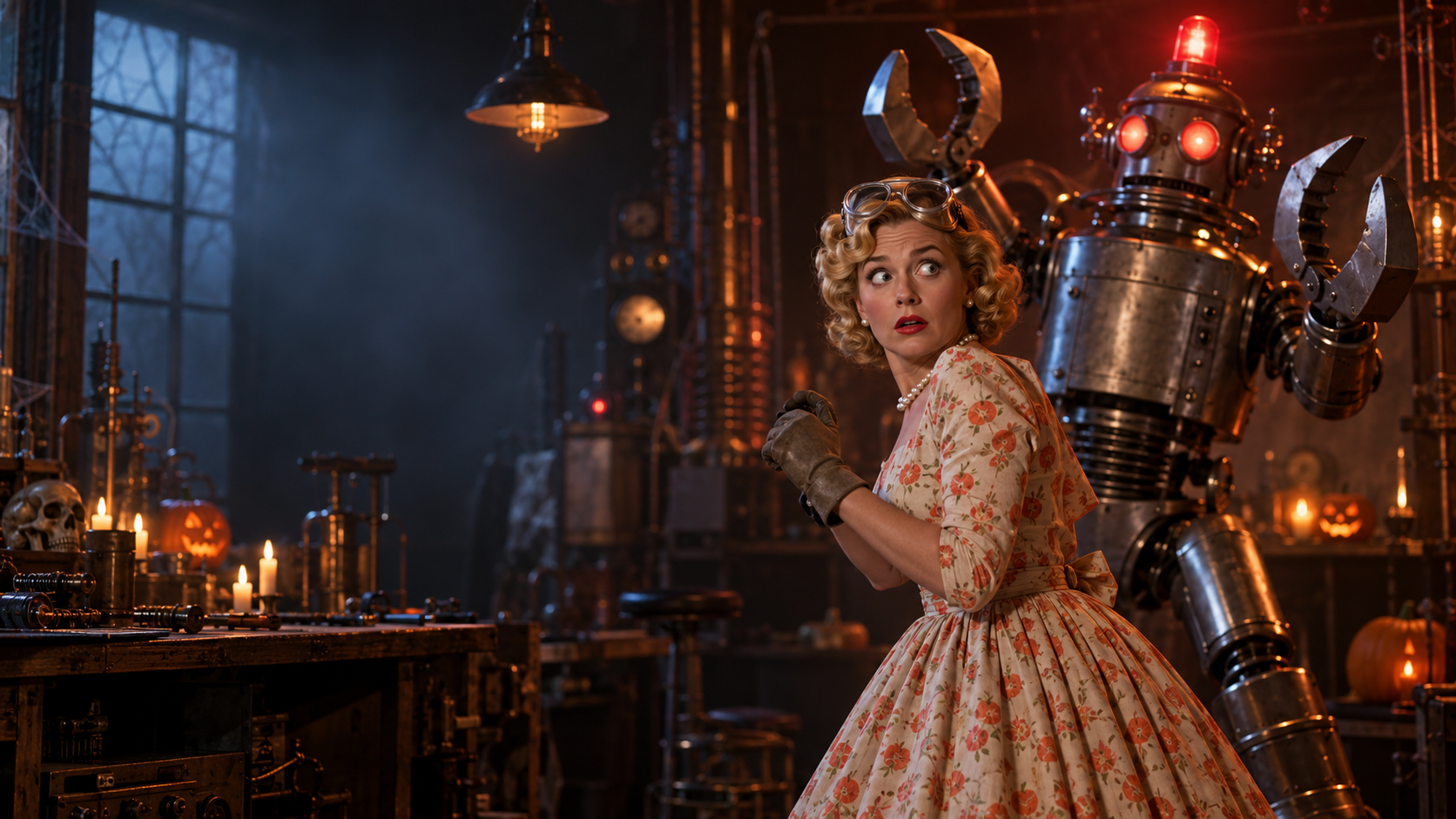 The Inventor’s Wife: SNL’s Reported Halloween Robot Sketch
-
 Michael Mann Reportedly Injured in Gun-Range Accident
-
 You Can See Everything Narrowly Tops Clayface