Nanotyrannus Skeleton Jodi Sells for $47.3 Million
Nanotyrannus Skeleton Jodi Sells for $47.3 Million
A rare Nanotyrannus skeleton known as Jodi sold for $47.3 million at a New York auction, making it one of the most valuable fossils ever sold. Reports described the specimen as the second-most valuable fossil ever auctioned. Source 1
The sale demonstrates strong demand for rare dinosaur fossils, particularly visually complete skeletons linked to iconic predators such as Tyrannosaurus rex. It also raises a difficult question: what happens to scientific and public access when an important fossil moves from a museum or exhibition setting into private ownership?
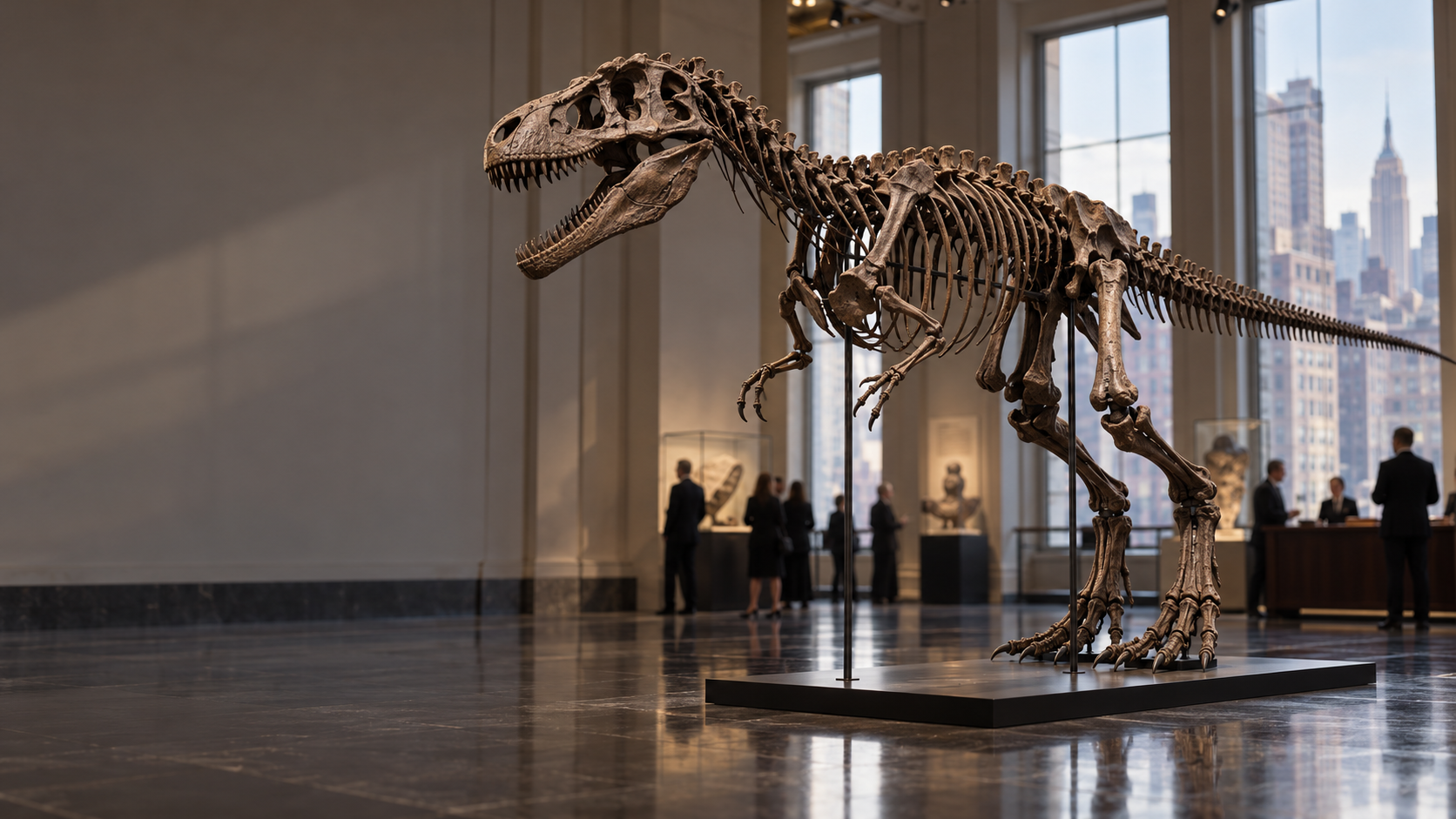
Jodi attracted attention before the sale through a public exhibition in New York. The display introduced visitors to the skeleton’s anatomy, its relationship to tyrannosaurs and the process of fossil preparation. After the auction, its future exhibition and research access became uncertain. Source 3
What Is Nanotyrannus?
A Tyrannosaur Relative
Nano tyrannus is generally described as a small-bodied tyrannosaur closely related to Tyrannosaurus rex. Popular coverage often calls it a “T. rex cousin,” a useful but simplified description of a complex scientific issue.
The animal belonged to the tyrannosaur group, which included some of the most powerful terrestrial predators of the Late Cretaceous. Compared with adult T. rex, specimens assigned to Nanotyrannus are associated with a smaller and more lightly built animal.
A well-preserved tyrannosaur skeleton can provide evidence about anatomy, movement, growth and the evolution of large predatory dinosaurs. Its importance therefore cannot be measured by its auction price alone.
The Debate Over Nanotyrannus and Juvenile T. rex
The classification of Nanotyrannus remains disputed. Some researchers treat it as a distinct genus, while others argue that fossils assigned to Nanotyrannus may represent juvenile Tyrannosaurus rex.
The distinction matters. If Nanotyrannus was a separate genus, its fossils could represent a distinct branch of tyrannosaur evolution. If the specimens were juvenile T. rex, they could show how the species changed as it matured.
Researchers may examine:
- Bone structure and microscopic growth patterns.
- Skull proportions.
- Tooth arrangement.
- Limb anatomy.
- Differences between juvenile and adult tyrannosaurs.
- Variation within known T. rex fossils.
The $47.3 million sale does not resolve this question. Commercial descriptions and auction labels are not substitutes for peer-reviewed research.
Why a Complete Skeleton Matters
Completeness affects both the scientific and commercial value of a fossil. Many dinosaur discoveries consist of isolated bones or partial skeletons. A comparatively complete specimen offers more anatomical information and allows researchers to compare multiple parts of the body at once.
A well-preserved skeleton can support more accurate anatomical reconstruction, studies of growth and development, comparisons with related tyrannosaurs and improved museum interpretation. These benefits are separate from commercial value. A fossil may command a high price because it is visually impressive, while its scientific importance depends on preservation, documentation, preparation quality and research access.
The $47.3 Million Auction Sale
Jodi’s Record-Level Price
The Nanotyrannus skeleton nicknamed Jodi sold for $47.3 million at an auction in New York. Reports described the transaction as making it the second-most valuable fossil ever sold. Source 1
The available reports do not establish every transaction detail. The auction house, sale date, buyer’s identity and whether the amount represents a hammer price or includes fees should be confirmed through official auction records.
The New York Exhibition
The sale followed a public exhibition of the fossil in New York. The pre-auction display allowed potential buyers, journalists and members of the public to see the skeleton before it was offered for sale. Source 3
Pre-sale exhibitions are common at major natural-history auctions. They allow viewers to assess a fossil’s condition and presentation while increasing media coverage and buyer interest. In Jodi’s case, the exhibition presented the skeleton as both a scientific specimen and a major cultural artifact.
Why the Price Matters
A price of $47.3 million reflects demand for fossils that combine rarity, completeness, visual impact and a connection to a famous dinosaur group. Factors that can increase interest include:
- A relatively complete skeleton.
- Strong preservation.
- A dramatic mounted display.
- A recognizable tyrannosaur identity.
- Documented ownership and discovery history.
- Potential value for exhibitions and education.
The sale may influence future fossil auctions by encouraging owners to offer other rare specimens. It may also increase asking prices, media attention and public scrutiny.
A high price does not prove that the specimen represents a separate Nanotyrannus genus. It does not establish that every part of the mounted skeleton is original. Auction value and scientific consensus are different measures.
Why Rare Dinosaur Fossils Command High Prices
Most dinosaur fossils are incomplete. Geological processes, erosion, scavenging and later disturbance can destroy or scatter bones before burial. Fossil preparation is also difficult and expensive.
A skeleton with many associated bones is therefore unusual. Completeness improves its appearance and may provide a stronger basis for scientific comparison. It also makes the specimen attractive to museums, collectors and venues seeking a dramatic centerpiece.
Tyrannosaurs have exceptional public appeal. Their large skulls, powerful jaws and predator image make them effective museum exhibits. That cultural appeal expands the market beyond academic institutions to private collectors, corporations, entertainment venues and educational organizations.
Scientific importance depends on more than the number of bones present. Researchers also need reliable documentation, accurate preparation records and access to the original material. A visually complete skeleton with uncertain provenance or extensive reconstruction may raise different scientific questions from a fully documented specimen.
The Scientific Questions Raised by Jodi
Jodi may attract scientific attention because of the continuing debate over the identity of Nanotyrannus. Researchers could examine its bones, skull proportions, teeth and growth indicators and compare them with known T. rex specimens.
If the specimen retains characteristics that remain distinct after detailed study, it could support the interpretation of Nanotyrannus as a separate genus. If its anatomy fits a growth sequence leading to adult T. rex, it could support the alternative interpretation.
The sale itself does not answer the question. Classification requires detailed analysis, comparison with other fossils and publication in the scientific literature.
Mounted fossils often combine original bones with restored sections, casts and structural supports. These additions may be necessary for display but must be documented clearly. Researchers need to know which elements are original and which have been reconstructed.
Public Access After the Sale
Private ownership can fund fossil discovery, preparation and preservation. Specialized collectors may also invest in secure storage, conservation and professional mounting.
The concern is long-term access. A private buyer may not display the fossil publicly, may restrict scientific examinations or may move it between private locations. The specimen could become less visible to researchers, students and museum visitors.
These outcomes are not inevitable. Long-term loans, scheduled research access and rotating exhibitions can preserve public benefits after a private sale. Other options include:
- Lending the skeleton to a museum for a long-term exhibition.
- Permitting scheduled examinations by qualified researchers.
- Publishing high-resolution images, scans and measurements.
- Creating a digital three-dimensional model.
- Organizing rotating exhibitions.
- Documenting original and reconstructed elements in a public catalogue.
No such arrangement for Jodi should be assumed without confirmation.
What the Sale Says About the Fossil Market
The auction shows how iconic fossils can function simultaneously as scientific specimens, natural-history exhibits, collectibles and high-value cultural objects. That combination makes exceptional fossils attractive to buyers who value education, rarity, design and prestige.
A high-profile sale may encourage other fossil owners to enter the auction market. Sellers may expect higher prices for rare specimens, while buyers may compete more aggressively for skeletons with strong provenance and display quality. The result could be greater investment in preparation and conservation, along with more debate over whether scientifically important material should be sold privately.
Jodi’s $47.3 million price reflects market demand. It does not settle the classification of Nanotyrannus, prove the skeleton’s completeness or establish the scientific interpretation used in every exhibition. The fossil’s lasting importance will depend on what researchers can study, document and publish.
Key Facts
- Specimen: Rare Nanotyrannus skeleton.
- Nickname: Jodi.
- Sale price: $47.3 million.
- Location: New York auction.
- Reported ranking: Second-most valuable fossil ever sold.
- Pre-sale event: Public exhibition in New York.
- Main post-sale issue: Continued public and scientific access.
- Scientific context: Debate over whether Nanotyrannus was a distinct genus or a juvenile form of T. rex.
Conclusion
The sale of the Nanotyrannus skeleton Jodi for $47.3 million confirms the extraordinary market power of rare dinosaur fossils. Its value came from a combination of rarity, visual impact, tyrannosaur appeal and scientific intrigue. Source 7
The specimen is also linked to an unresolved paleontological question: whether Nanotyrannus represents a distinct tyrannosaur or juvenile T. rex. Jodi could become an important source of evidence if researchers receive meaningful access to its original bones and preparation records.
Its broader significance will depend on what happens next. Preservation, documentation, research access and responsible public interpretation will determine whether Jodi remains more than one of the most expensive fossils ever sold.
Frequently Asked Questions
What is Nanotyrannus?
Nano tyrannus is generally described as a small tyrannosaur closely related to Tyrannosaurus rex. Some researchers regard it as a distinct genus, while others argue that fossils assigned to Nanotyrannus may represent juvenile T. rex.
How much did the skeleton sell for?
The skeleton sold for $47.3 million at an auction in New York. Source 5
What is the skeleton’s name?
The specimen was known as Jodi, according to reports covering the auction and its pre-sale exhibition. Source 7
Was the fossil displayed before the auction?
Yes. The tyrannosaur fossil was exhibited in New York before the sale, giving members of the public an opportunity to view it. Source 3
Why is the sale controversial?
The main concern involves future public and scientific access. A private buyer could restrict museum display or research access, although loans, digital documentation and research agreements could preserve access.
Is Nanotyrannus the same as Tyrannosaurus rex?
The relationship remains debated. Some researchers treat Nanotyrannus as a separate tyrannosaur, while others interpret specimens assigned to it as juvenile T. rex. The sale did not resolve that dispute.
Artikel Terkait
-
 Potential New Dwarf Planet: What We Know So Far
-
 What Could Explain Lone Pine’s Blinding Night Lights?
-
 New Dinosaur Species Found at English Brickworks
-
 Triassic Armored Amphibian May Have Lived Entirely at Sea
-
 Space-Mirror Satellite Raises Concerns Over Nighttime Light
-
 Nanotyrannus Skeleton Reportedly Sells for $47.3 Million