NASA Recruits the Next Generation of Astronauts
NASA Recruits the Next Generation of Astronauts
NASA has opened recruitment for its next generation of astronauts, creating a potential pathway into the agency’s future human-spaceflight programs. Reports describe the initiative as part of NASA’s effort to strengthen its astronaut corps for missions involving the Moon, Mars, scientific research, and operations beyond low Earth orbit Source 1.
Recruitment does not mean that every successful applicant will immediately fly into space. Astronaut candidates typically face a competitive application process, medical assessments, technical evaluations, and years of training before receiving a mission assignment. Selection creates an opportunity to join NASA’s astronaut corps; it does not guarantee a trip to the Moon or Mars.
Why NASA Is Recruiting
Astronaut recruitment is a long-term workforce strategy. NASA must identify and prepare candidates well before they are needed for flight operations because training covers spacecraft systems, emergency procedures, scientific work, physical conditioning, and team-based simulations.
The selection pathway generally includes:
- Application: Candidates submit information and supporting documents.
- Screening: NASA evaluates eligibility, education, work history, and experience.
- Selection: A small group is chosen as astronaut candidates.
- Training: Candidates complete extensive technical and operational preparation.
- Assignment: Qualified astronauts may later receive specific mission assignments.
These stages can take years. NASA therefore recruits early to preserve continuity between current crews and future exploration teams.
The agency also needs astronauts who can work in technically demanding environments with limited resources, complex equipment, strict procedures, and serious consequences for mistakes. Candidates must combine professional expertise with sound judgment, communication, adaptability, and emotional resilience.
Missions Beyond Low Earth Orbit
Reports connect the recruitment effort with possible future missions to the Moon and Mars Source 9. Potential responsibilities could include:
- Lunar science and surface operations.
- Spacecraft and habitat systems.
- Technology demonstrations.
- Life-support testing.
- Sample collection and analysis.
- Long-duration mission research.
- Preparation for human missions to Mars.
- International and commercial spaceflight partnerships.
NASA’s astronaut corps must also continue supporting low Earth orbit. Lunar and Mars ambitions do not remove the need for astronauts who can operate spacecraft, conduct experiments, manage station systems, and support commercial missions.
Potential Lunar Responsibilities
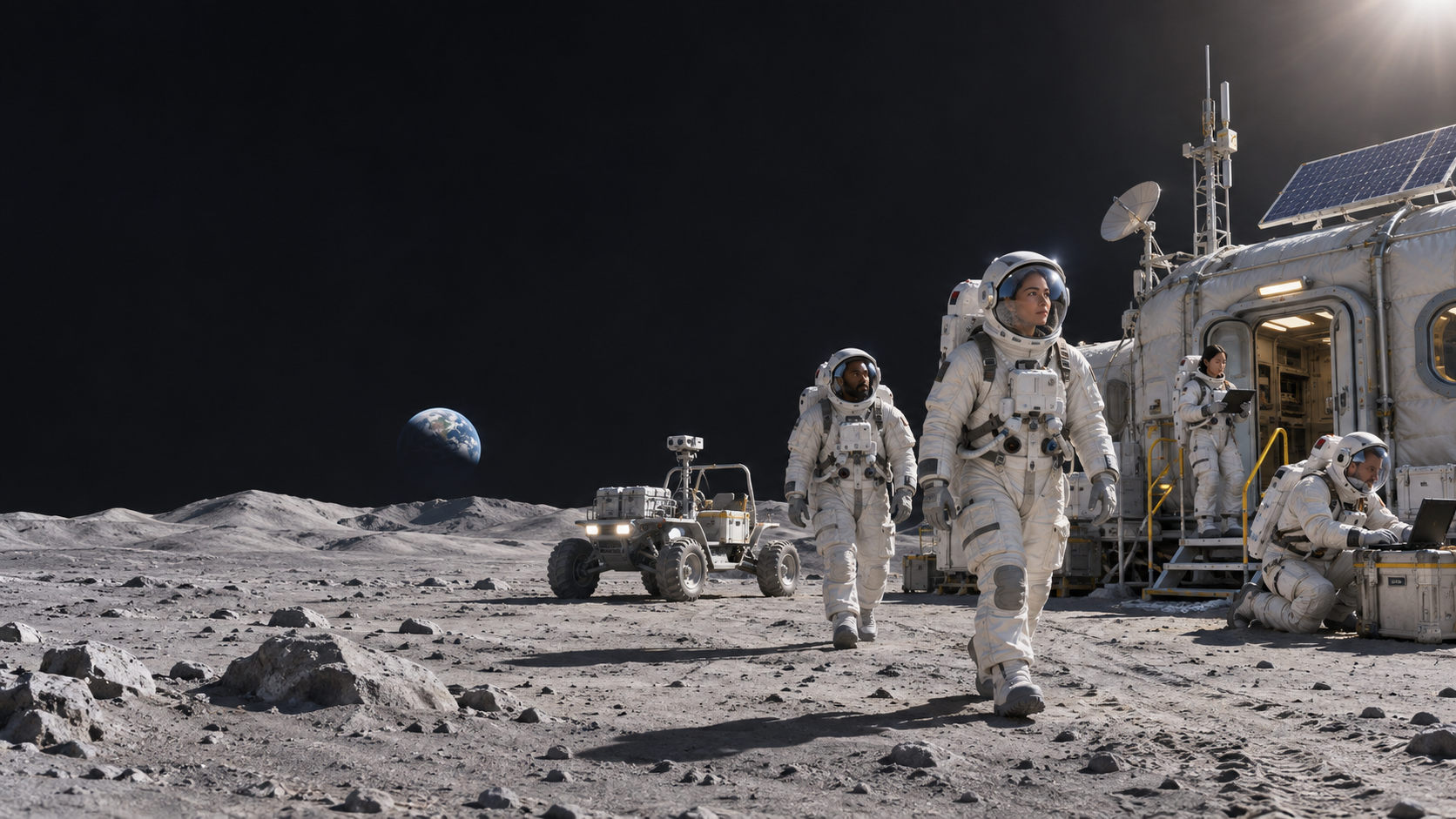
The Moon could become an important training and operational environment for future human exploration. Astronauts may conduct experiments, test equipment, operate vehicles, and evaluate systems needed for longer missions.
Possible lunar responsibilities include:
- Conducting geological and scientific investigations.
- Collecting and documenting samples.
- Deploying research instruments.
- Operating rovers and surface vehicles.
- Testing communications systems.
- Maintaining life-support equipment.
- Evaluating habitats and surface infrastructure.
- Practicing emergency procedures and extended stays.
Reports connect NASA’s recruitment with potential support for lunar-base construction or operations Source 5. This should be treated as a potential mission direction, not confirmation that any selected astronaut will work on a lunar base.
Preparing for Mars
Mars missions would present challenges beyond those of short-duration lunar expeditions. Crews could face communication delays, limited supplies, radiation exposure, isolation, and reduced access to medical support.
A Mars crew would need to:
- Diagnose and manage medical problems independently.
- Repair equipment with limited spare parts.
- Make decisions without immediate guidance from Earth.
- Maintain physical and psychological health over long periods.
- Operate scientific instruments and surface vehicles.
- Manage power, water, air, and food systems.
- Respond to technical failures and environmental hazards.
NASA must develop this capability long before a Mars mission becomes operational. Recruitment supports that preparation by creating a pipeline of professionals who can train for long-duration exploration. Available reports describe possible participation in future Moon and Mars missions, but they do not establish that new recruits will travel to Mars Source 9.
Who Could Apply?
NASA generally seeks candidates with advanced education and professional experience in technical, scientific, medical, or operational fields. Relevant backgrounds may include:
- Aerospace, mechanical, and electrical engineering.
- Computer science and software systems.
- Physics, astronomy, biology, and chemistry.
- Medicine and emergency care.
- Geology and planetary science.
- Robotics and autonomous systems.
- Aviation and flight testing.
- Scientific research and field operations.
An applicant’s job title matters less than the depth and relevance of their responsibilities. Strong candidates should demonstrate technical competence, operational judgment, leadership, teamwork, and adaptability.
Astronauts work in confined environments where mistakes can affect an entire crew. Clear communication, careful listening, calm decision-making, respect for different disciplines, openness to feedback, and consistent attention to safety are essential.
Candidates must also meet NASA’s medical and physical standards. Evaluations may cover vision, hearing, cardiovascular health, coordination, balance, and general conditioning. Medical requirements can change, so applicants should rely on the current official NASA announcement rather than old numerical standards or unofficial summaries.
Citizenship, education, professional experience, medical status, documentation, deadlines, and submission procedures may vary by recruitment cycle. Applicants should verify every condition through NASA’s official careers information.
How Selection and Training Work
NASA may review education, work history, technical achievements, operational experience, and eligibility. Shortlisted candidates may undergo interviews and assessments covering technical knowledge, communication, problem-solving, leadership, decision-making, teamwork, adaptability, and performance under pressure.
Comprehensive medical and physical testing can assess conditioning, sensory function, balance, coordination, cardiovascular health, and the ability to tolerate demanding conditions. Psychological evaluation may examine resilience, judgment, teamwork, and responses to isolation or stress.
Selected applicants become astronaut candidates before becoming fully qualified astronauts. Training may include:
- Spacecraft systems.
- Life-support equipment.
- Communications and navigation.
- Emergency procedures.
- Robotics.
- Extravehicular activity.
- Survival techniques.
- Space science.
- Mission operations.
- Simulated lunar or planetary environments.
- Partner-crew communication.
Candidates may practice equipment failures, communication interruptions, medical emergencies, fire, pressure loss, and other mission hazards. They must learn to diagnose problems, prioritize actions, communicate clearly, and protect the crew.
Training can also involve neutral-buoyancy facilities, underwater laboratories, reduced-gravity aircraft, virtual-reality simulators, and full-scale spacecraft mockups. Science and field training may cover geological observation, sample collection, equipment deployment, research documentation, and communication with scientists on Earth.
Successful training does not guarantee a specific mission. Assignments depend on program needs, crew composition, health, qualifications, schedules, and available flight opportunities.
Why the Recruitment Matters
Experienced astronauts eventually leave active flight service. A new class allows NASA to preserve institutional knowledge while developing capabilities for lunar surface operations, advanced robotics, habitat systems, and Mars preparation.
The next generation could support several stages of human spaceflight:
- Research and operations in low Earth orbit.
- Lunar missions and surface science.
- Testing habitats and life-support systems.
- Development of infrastructure beyond Earth.
- Preparation for eventual Mars exploration.
Future missions may involve international agencies, private companies, universities, and research organizations. Astronauts may operate vehicles, habitats, instruments, and communications systems developed by different partners, making interoperability and cross-organizational communication increasingly important Source 3.
What Applicants Should Do
Applicants should check NASA’s official announcement for:
- Opening and closing dates.
- Citizenship requirements.
- Degree and professional-experience requirements.
- Medical and physical standards.
- Required documents.
- Application methods.
- Official contact information.
They should prepare a precise professional profile covering technical education, relevant work, flight or operational experience, research achievements, leadership, teamwork, emergency or field experience, and measurable project results.
Applicants should avoid unofficial links, incomplete records, unverifiable claims, and assumptions that enthusiasm for space is sufficient. Applications should be submitted only through an official NASA channel listed on NASA’s careers website.
What Current Reports Confirm
Available reports confirm that NASA is seeking a new generation of astronauts and that the effort relates to future human spaceflight Source 1. Coverage also identifies possible links to lunar exploration, a future lunar base, and Mars missions Source 5.
They do not establish the exact deadline, number of positions, complete eligibility rules, required degrees, current medical standards, training schedule, or whether selected candidates will receive lunar or Mars assignments. Applicants must verify those details through NASA’s official website.
Conclusion
NASA’s astronaut recruitment signals preparation for the next phase of human space exploration. The next generation could support low Earth orbit operations, lunar science, habitat testing, future lunar infrastructure, Mars preparation, and research across multiple spaceflight programs.
The opportunity requires more than a passion for space. Candidates need technical expertise, physical readiness, judgment, communication skills, teamwork, and adaptability. Selection creates a pathway into NASA’s astronaut corps, not a guaranteed flight assignment.
Frequently Asked Questions
Is NASA recruiting a new generation of astronauts?
Available reports state that NASA has opened or is conducting recruitment. Applicants should verify the current status, deadline, and process through NASA’s official website.
What missions could new astronauts support?
They could support missions involving the Moon, lunar infrastructure, Mars preparation, low Earth orbit operations, scientific research, and technology demonstrations.
Do applicants need to be pilots?
Not necessarily. Astronaut teams require expertise in engineering, science, medicine, computer systems, geology, robotics, research, and operations. The official notice determines accepted qualifications.
How long does astronaut training take?
Candidates complete extensive training before becoming eligible for flight assignments. The duration depends on NASA’s program, mission requirements, and each candidate’s background.
Does selection guarantee a trip to the Moon or Mars?
No. Flight assignments depend on mission needs, training, qualifications, health, crew composition, and program schedules.
Artikel Terkait
-
 How to Make Your Mac mini Faster Without Upgrading
-
 NASA Seeks Astronauts for Future Moon Missions
-
 Snap Spectacles Are More Comfortable, but Still Expensive
-
 Ocarina of Time Native PC Port Uses Static Recompilation
-
 5 Things to Do Before Installing GTA 6
-
 Ocarina of Time Remake Speedruns Are Already Breaking