New Iguanodontian Dinosaur Identified in England
New Iguanodontian Dinosaur Identified in England
Researchers have identified a new species of iguanodontian dinosaur through the study of a fossil preserved in the Natural History Museum in London. The specimen was not discovered during a recent excavation. Instead, its scientific importance emerged when researchers reexamined material already held in the museum’s collection.
The finding expands Britain’s record of prehistoric dinosaurs and demonstrates how historical fossil collections can continue to produce discoveries. It also has a personal dimension: reports state that the dinosaur was named in tribute to a devoted father and husband from Surrey. Source 1
What Is an Iguanodontian?
Iguanodontians were mostly herbivorous ornithopod dinosaurs. They generally had beak-like mouths, strong hind limbs, and teeth adapted for processing vegetation. The group included animals of different sizes and body shapes.
Some iguanodontians may have moved on two legs, four legs, or both, depending on the species and activity. Their fossils are particularly important to the history of dinosaur research in England and Europe, where early discoveries helped establish dinosaurs as a major subject of scientific study.
The available reports identify the specimen as a new British dinosaur associated with the Natural History Museum’s collection. They do not provide enough verified information to state the formal species name, exact anatomical diagnosis, or closest relatives. Those details should be confirmed through the original scientific paper or an official museum announcement. Source 7
Why It Is Considered a New Species
A new species designation requires more than an unusual bone. Researchers must show that the specimen has a combination of anatomical features that distinguishes it from known species.
The assessment can include:
- Comparing bone shapes and proportions.
- Identifying distinctive anatomical traits.
- Examining differences from related iguanodontians.
- Assessing the fossil’s geological age and location.
- Testing whether the differences reflect a separate species rather than individual variation, growth, injury, or preservation damage.
The available summaries do not identify the dinosaur’s specific diagnostic features. Claims about particular bones, evolutionary relationships, or unique structures therefore require confirmation from the primary research publication.
An Old Fossil With New Significance
The Natural History Museum holds extensive fossil collections assembled over many generations. Specimens collected during earlier expeditions, surveys, and excavations may later receive new interpretations as scientific knowledge develops.
This discovery illustrates the difference between field discovery and collection-based research. In this case, researchers recognized a previously unrecognized species in material that had already been collected and stored. One report states that the fossil was unearthed 25 years before its scientific significance was recognized. Source 3
Historical fossils can remain unclassified or assigned to a broad group because earlier researchers had limited comparative material, incomplete preparation, missing documentation, or classification systems that grouped together animals now recognized as distinct.
Modern reassessment may involve:
- Reviewing collection records and locality information.
- Examining the fossil’s condition and preparation.
- Recording measurements and anatomical features.
- Comparing the specimen with related dinosaurs.
- Testing whether its differences support recognition as a separate species.
- Publishing the results for evaluation by other specialists.
New imaging methods, larger comparative datasets, and updated approaches to dinosaur taxonomy can reveal features that were previously difficult to recognize.
Where and When Did It Live?
The landscapes that now form England changed substantially during the Mesozoic Era. Ancient environments included river systems, floodplains, wetlands, coastal areas, and vegetated lowlands. Their conditions varied with changes in sea level, climate, sedimentation, and geography.
Iguanodontians lived in these changing environments and fed primarily on vegetation. However, the precise diet, behavior, and habitat of this species should not be stated without evidence from its anatomy or geological context.
The fossil’s original locality would help determine its approximate age, environment, preservation conditions, and relationship to other dinosaurs from the same region. The available summaries establish the Natural History Museum as the research institution but do not provide a fully verified geological formation or locality.
What Iguanodontians Were Like
Iguanodontians were primarily herbivorous. Their beak-like mouth structures could help crop vegetation, while their teeth processed plant material. Different species may have consumed different plants depending on their size, habitat, and available vegetation.
Their bodies combined strong hind limbs with substantial tails and powerful forelimbs. Some members of the group could move bipedally, while others supported themselves on all four limbs. Scientists infer locomotion from limb proportions, joint surfaces, muscle attachments, and the relationship between the body and pelvis.
Herbivorous dinosaurs faced predators and environmental pressures. Possible survival strategies included large body size, speed, group behavior, defensive anatomy, and vigilance. These are general iguanodontian possibilities, not confirmed behaviors for this newly identified species.
The Human Story Behind the Name
Reports state that the dinosaur was named in tribute to a devoted father and husband from Surrey. Source 9
The available summaries do not provide enough confirmed biographical information to state the person’s full name, explain the connection to the fossil, or give the formal etymology. Those details should be verified through the museum announcement or original taxonomic paper.
Species names can honor researchers, collectors, local communities, family members, or others connected with a specimen’s history. The tribute does not affect the dinosaur’s biological classification; that classification depends on anatomical and evolutionary evidence.
Why Museum Collections Matter
Museum collections preserve fossils and the records associated with them. A specimen examined decades ago may become more informative when researchers gain access to better anatomical knowledge, improved imaging, larger comparative datasets, updated evolutionary models, and more precise measurement techniques.
Taxonomy changes as evidence improves. A fossil once assigned to a known genus may later be recognized as a separate species, a juvenile form, an adult of another species, or part of a different evolutionary branch. Such revisions do not necessarily mean earlier scientists acted unreasonably; they reflect the evidence available at the time.
The discovery may encourage further study of British dinosaur fossils collected decades ago. It does not mean that every old specimen represents a new species. It shows that museum collections remain valuable research archives for testing ideas about dinosaur evolution and distribution.
How a New Dinosaur Species Is Established
Researchers must identify diagnostic traits that distinguish a specimen from related dinosaurs. These may involve bone structure, proportions, joint shape, or a combination of features.
Scientists must also account for individual variation, age, sex, injury, preservation, and distortion. Strong species diagnoses rely on multiple consistent characteristics and comparisons with several reference specimens.
A formal description generally records the species name, specimen designation, museum repository, geographic and geological context, diagnostic features, researchers, journal, and publication details. Media reports can explain a discovery, but they do not replace the primary taxonomic paper.
What the Discovery Adds to England’s Dinosaur Record
The new species contributes to knowledge of:
- Iguanodontian evolution.
- Dinosaur distribution across ancient England.
- Species turnover through geological time.
- Relationships among British ornithopods.
- The scientific value of museum-based research.
One species does not rewrite the entire dinosaur family tree. It adds another piece to an incomplete record that remains open to revision.
The discovery also shows why fieldwork and collection-based research are both important. New excavations provide fresh evidence, while museums preserve older evidence for future generations. Together, they allow paleontologists to build increasingly detailed accounts of prehistoric life.
Frequently Asked Questions
What is an iguanodontian dinosaur?
An iguanodontian is a mostly herbivorous ornithopod dinosaur. Iguanodontians included species with different body sizes, limb structures, and movement styles. Many had beak-like mouths and teeth suited to processing vegetation.
Where was the new dinosaur identified?
It was identified through research on fossils held in the Natural History Museum’s collection in London. The fossil was originally found elsewhere, but its precise locality and geological formation require confirmation from the primary source.
Was the dinosaur newly excavated?
No. Available summaries describe a fossil that had already been collected and stored. One report states that it was unearthed 25 years before being recognized as a new species. Source 3
Why did scientists classify it as a new species?
Researchers found anatomical differences significant enough to distinguish the specimen from known iguanodontians. The supplied summaries do not identify the exact diagnostic features, which should be taken from the original scientific description.
Who was the dinosaur named after?
Reports say it honors a devoted father and husband from Surrey. The available information does not provide enough confirmation to state his full name or the exact naming explanation. Source 9
Why are museum fossil collections important?
They preserve fossils and associated records for future research. New technology, additional specimens, and improved taxonomy can help scientists recognize features that earlier researchers could not identify. A fossil collection in England can therefore remain scientifically valuable long after its original excavation.
Artikel Terkait
-
 Potential New Dwarf Planet Discovered Beyond Pluto
-
 Sunlight-as-a-Service Space Test Alarms Astronomers
-
 Study Challenges the Idea That Comets Seeded Life on Earth
-
 Metal-Free Magnetic Sensor Enables Wireless Implant Monitoring
-
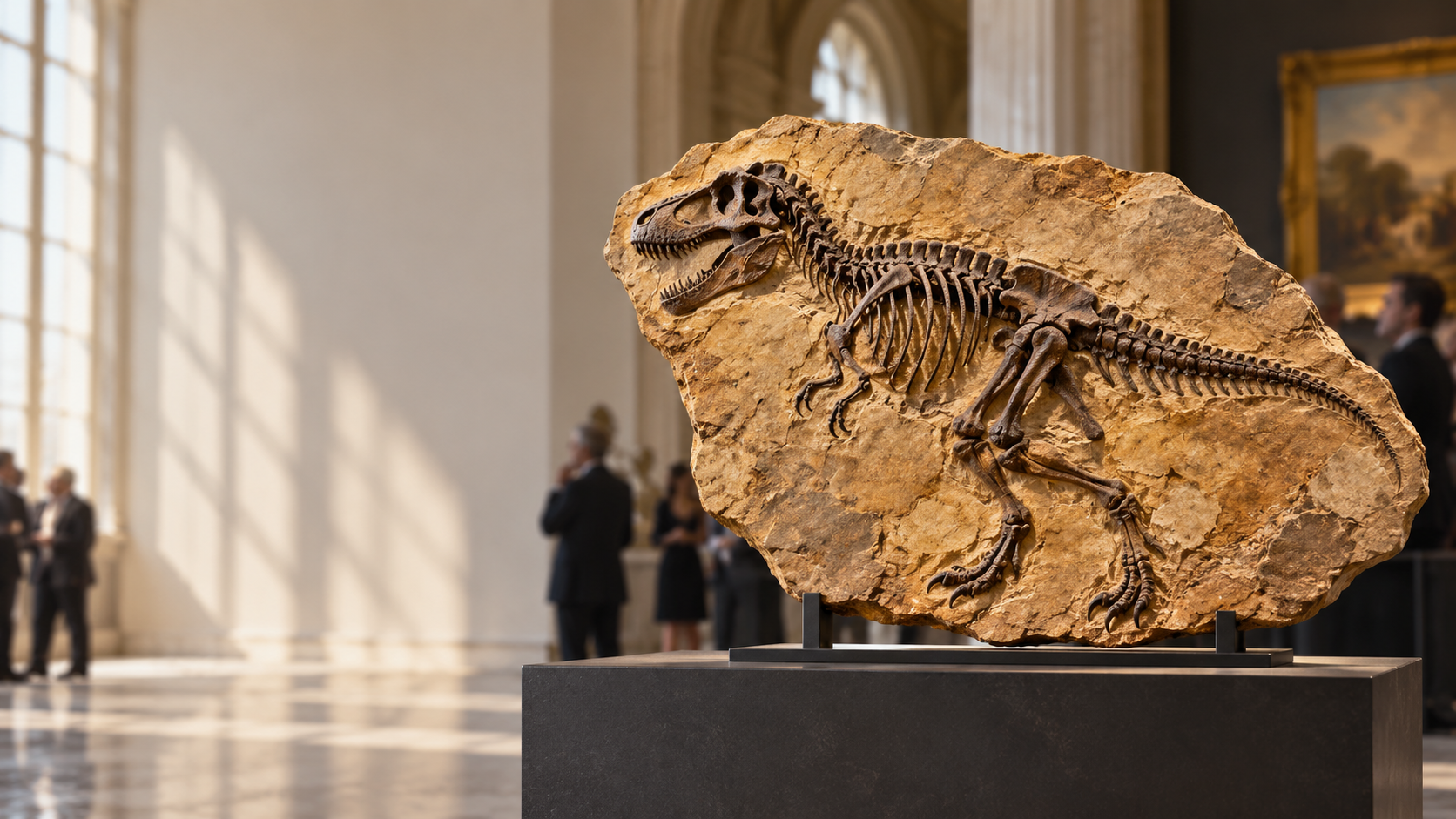 Mini T. rex Fossil Reportedly Sells for $47 Million
-
 Space Mirrors for Nighttime Sunlight: Innovation or Gimmick?