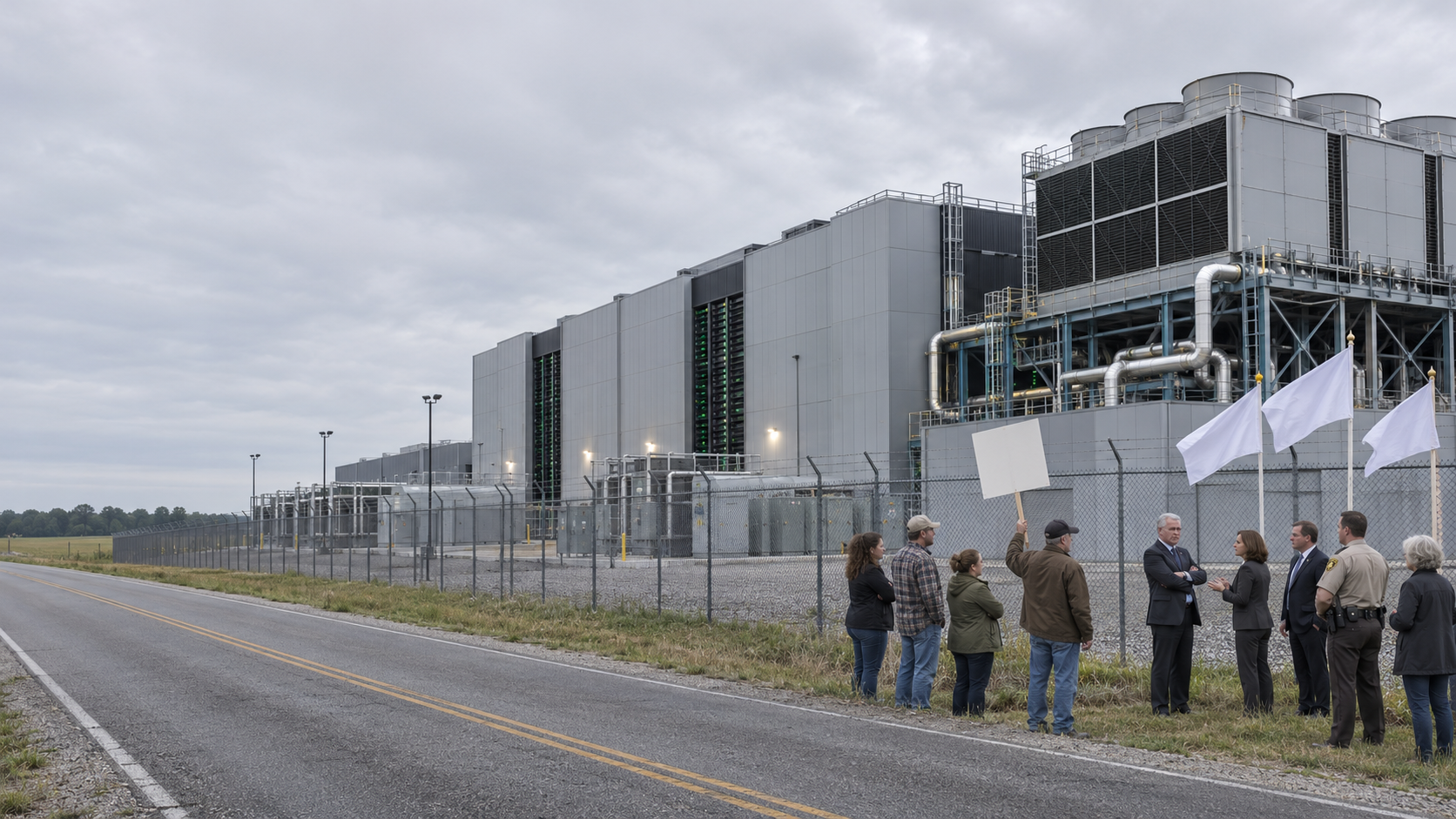
OpenAI to Keep Investing in AI Data Centers
OpenAI to Keep Investing in AI Data Centers Despite Election Results
OpenAI plans to continue investing in artificial intelligence data centers regardless of the outcome of the U.S. election, according to comments attributed to Chief Financial Officer Sarah Friar in a CNBC report. The position places OpenAI’s infrastructure strategy within a long-term business context rather than tying it to a specific administration.
The company’s continued investment reflects the growing need for computing capacity to train advanced models, operate AI products, support enterprise customers, and handle rising inference demand. Data center expansion also affects chip manufacturers, cloud providers, utilities, construction companies, energy markets, investors, and policymakers.
What OpenAI’s CFO Reportedly Said
Friar reportedly told CNBC that OpenAI would continue investing in AI data centers regardless of who won the U.S. election. A separate summary described the comments as part of the company’s broader infrastructure expansion plans. Source 1
The statement indicates a strategic direction, not a fixed spending commitment. Continued investment could involve reserving capacity, expanding cloud agreements, purchasing specialized chips, financing new facilities, or supporting power, cooling, storage, and networking systems. It does not establish a specific budget, construction schedule, location, or ownership model. Source 3
Why OpenAI Needs More Computing Capacity
Model Training
Training advanced AI systems requires large clusters of specialized processors, high-speed networking, extensive storage, cooling systems, and reliable power. Network performance can be nearly as important as processor performance because delays between chips can reduce training efficiency and increase costs.
Larger models require more resources for experimentation, training, evaluation, and safety testing. OpenAI must therefore plan for both current demand and future model requirements.
Inference Demand
Inference is the process of running a trained model to produce text, code, images, audio, video, or other outputs. Demand comes from chatbots, coding assistants, enterprise search, document analysis, customer-service systems, and automated business workflows.
Individual requests may require limited computing power, but millions of requests can create substantial, continuous demand. Longer conversations, larger documents, multimodal inputs, and real-time applications increase infrastructure requirements further.
Product and Enterprise Expansion
Additional capacity can help OpenAI handle larger user volumes, improve availability during demand peaks, support enterprise service-level requirements, expand API access, and deploy more computationally intensive products.
How the Election Could Affect Expansion
An election can change the operating environment through regulation, permitting, energy policy, tax incentives, semiconductor controls, and environmental standards. These factors can affect where facilities are built, how quickly they receive approval, and how much they cost to operate.
Energy policy may influence electricity prices and generation options. Semiconductor controls may affect access to advanced hardware. Tax incentives may change the financial case for locating a facility in one region instead of another. Permitting rules can also influence construction schedules.
However, these policy effects do not necessarily remove the underlying commercial need for AI computing. OpenAI may adjust the pace, location, financing, or design of projects while maintaining its broader infrastructure strategy.
A commitment to continued investment is not a guarantee that every project will proceed on its original schedule. Investors should separate four questions: whether OpenAI intends to invest, how quickly projects will be built, where facilities will be located, and how much they will cost.
The Reported $1.4 Trillion Estimate
A Tech Insider summary reported that OpenAI’s data center spending could reach $1.4 trillion. The available summary does not establish whether that figure represents a single project, multiple projects, a long-term estimate, partner-funded infrastructure, industry-wide spending, an approved budget, or immediate cash expenditure. Source 5
The figure should therefore be presented as a reported potential estimate, not as a confirmed OpenAI commitment. The original report would need to be reviewed for its methodology, time frame, and definition.
Large-scale investment could benefit semiconductor manufacturers, cloud providers, data center operators, utilities, construction companies, power producers, networking vendors, cooling-equipment suppliers, and infrastructure firms. Spending may be distributed across many years and shared among multiple companies.
OpenAI may also rely on partnerships with cloud providers, chip suppliers, data center developers, utilities, energy companies, real estate developers, and financial institutions. Partnerships can spread capital costs and provide access to existing facilities, power, and networks, but they can also add operational complexity.
Economic and Industrial Implications
AI data centers require electricity for processors, cooling, networking, lighting, and backup systems. Large projects may require grid upgrades, new generation capacity, long-term power contracts, substations, transmission improvements, and renewable-energy procurement.
Construction could increase demand for transformers, electrical switchgear, cooling equipment, specialized chips, networking hardware, backup power systems, fiber connections, and skilled labor. Supply-chain pressure may raise costs or delay projects if several companies build at the same time.
Local communities may gain construction employment, technical jobs, tax revenue, and improved telecommunications or power infrastructure. They may also raise concerns about water use, electricity prices, land use, noise, environmental effects, traffic, and pressure on local services.
What Investors Should Watch Next
The strongest evidence of OpenAI’s plans will come from announcements identifying:
- Specific project costs and locations.
- Financing arrangements and ownership structures.
- Capacity targets and completion dates.
- Partnerships with cloud, chip, utility, and energy companies.
- Power agreements and grid interconnection requests.
- Environmental approvals, land purchases, and construction permits.
Investors should also monitor paid subscriptions, enterprise contracts, API usage, and adoption of new products. Infrastructure spending must ultimately be supported by sufficient demand, revenue, and utilization.
Key Takeaways
- Sarah Friar reportedly said OpenAI will continue investing in AI data centers regardless of the U.S. election outcome.
- The strategy reflects the long-term computing needs of model training, inference, and product expansion.
- Election results may affect permitting, energy policy, semiconductor access, regulation, and project economics.
- The reported $1.4 trillion figure is an estimate that requires further verification and should not be treated as an approved budget.
- Project announcements, financing, partnerships, power agreements, permits, and construction activity will provide the clearest evidence of OpenAI’s plans.
Frequently Asked Questions
Will OpenAI continue investing in AI data centers after the election?
According to comments attributed to CFO Sarah Friar in CNBC coverage, OpenAI plans to continue investing in AI data centers regardless of the election result. Source 3
Why does OpenAI need more data centers?
OpenAI needs computing capacity to train advanced models, operate AI products, support enterprise customers, and process growing inference demand. These workloads require specialized processors, networking, storage, cooling, and reliable electricity.
Could the election still affect OpenAI’s plans?
Yes. Policy changes could affect permitting, energy costs, environmental requirements, tax incentives, semiconductor access, financing, and construction timelines without changing the company’s reported intention to keep investing.
Is OpenAI committed to spending $1.4 trillion?
No confirmed commitment has been established by the available summaries. The $1.4 trillion figure should remain described as a reported estimate until its scope, time frame, and methodology are independently verified. Source 5
Who could benefit from the spending?
Potential beneficiaries include chip manufacturers, cloud providers, data center operators, utilities, construction companies, networking vendors, cooling-equipment suppliers, and energy producers.
What should readers watch for next?
Readers should monitor official announcements about locations, costs, financing, technology partners, power agreements, permits, and expected capacity. These details will show how broad investment plans translate into specific projects.