Voters Reject Nearly All 2026 Data-Center Ballot Measures
Voters Reject Nearly All 2026 Data-Center Ballot Measures
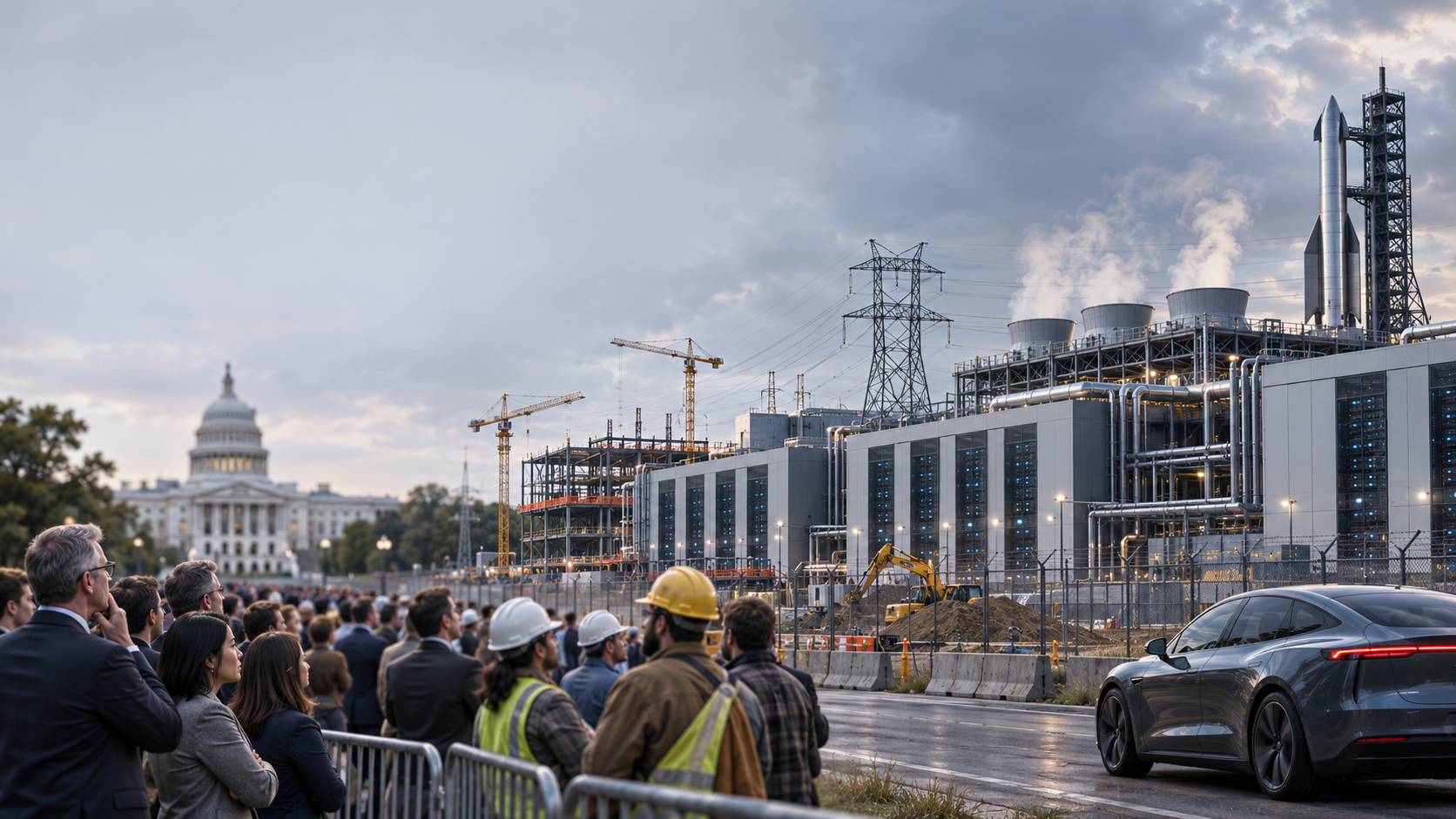
Data centers became a major local political issue during the 2026 midterm elections. Voters rejected nearly every reported data-center proposal placed before them, with one measure emerging as the only reported exception.
The results point to growing community opposition and a broader debate over who should pay for the electricity, water, roads, and other infrastructure required by large computing facilities.
The votes do not represent a nationwide rejection of data centers. Cloud computing, artificial intelligence, streaming, online commerce, and digital services continue to depend on large facilities. Instead, the results show that residents are increasingly willing to challenge projects when local costs, environmental effects, or long-term obligations have not been adequately explained.
Capital B News reported that voters in nearly 40 towns rejected proposed data-center projects. Fortune reported that Ohio had joined a growing list of 125 data-center moratoriums. These developments are separate, but together they indicate rising scrutiny of data-center expansion.
What Happened in the 2026 Midterms?
Nearly Every Reported Measure Failed
Available reporting says voters rejected every reported 2026 midterm data-center ballot measure except one. The available summaries do not provide a complete list of jurisdictions, vote totals, or the identity of the approved project. Those details require verification before publication.
Ballot measures place data-center development directly before residents rather than leaving the decision solely to planning commissions, zoning boards, or elected officials. A failed measure can require a revised application, a different site, new infrastructure commitments, or another public vote. In some jurisdictions, rejection may end the proposal entirely. The legal consequences depend on local law and the terms of each measure.
Opposition Spread Across Nearly 40 Towns
Capital B News reported that voters in nearly 40 towns rejected proposed data-center projects. The report does not establish that every rejection involved the same type of ballot measure, project design, or legal process. Still, the figure suggests that opposition has spread across multiple communities rather than remaining an isolated dispute.
Residents in different areas are raising similar questions about electricity, water, land use, taxes, noise, and public accountability.
The One Exception Requires Context
One reported measure passed, but available summaries do not identify the jurisdiction, vote margin, project terms, or approval conditions. Those facts should be confirmed before drawing conclusions about why voters approved it.
The approval shows that data-center construction is not automatically unacceptable. Local conditions differ. Some communities may have suitable industrial land, available grid capacity, lower water stress, or stronger financial incentives. Project size, cooling technology, employment commitments, tax arrangements, and infrastructure funding can also influence public opinion.
A single approval does not erase the broader pattern. It does show that voters may distinguish between projects based on their local benefits and public costs.
Why Are Communities Rejecting Data Centers?
Power Demand and Grid Reliability
Large facilities can require substantial electricity and may depend on new substations, transmission lines, distribution upgrades, or generation capacity. Residents and local officials may ask:
- Can the existing grid serve the facility?
- Who will pay for new utility infrastructure?
- Will the project affect peak-demand planning?
- Could electricity costs rise for households or businesses?
- How will the facility operate during periods of grid stress?
- Will it receive preferential treatment from utilities?
The available reporting does not establish that every rejected project would have increased electricity rates or threatened reliability. Those outcomes depend on utility rules, project design, power contracts, and grid conditions. However, demands for transparency and grid protections are becoming central to data-center policy debates.
Communities increasingly want project-specific evidence rather than broad assurances, including detailed power forecasts, utility agreements, and financing commitments.
Water Use and Environmental Pressure
Water use is another source of conflict, especially in drought-prone areas or communities with limited supplies. Demand varies according to climate, cooling technology, facility design, and operating conditions.
Residents may seek disclosure of:
- Expected annual and peak water consumption
- The source of the water supply
- Whether potable water will be used
- Recycling and conservation measures
- Effects on municipal capacity
- Contingency plans during droughts or shortages
The supplied reporting does not establish specific water-use figures. That limitation matters because a closed-loop cooling system can present different risks from one that relies heavily on evaporative cooling.
Even without confirmed impacts, incomplete information can increase opposition. Communities may view unclear water requirements as evidence that long-term environmental costs have not been fully evaluated.
Land Use, Noise, and Construction Impacts
Data centers are often large industrial buildings. Their campuses may include cooling equipment, backup generators, substations, security infrastructure, loading areas, and extensive parking or service zones.
Local opposition may focus on:
- Conversion of farmland or open space
- Changes to rural or residential landscapes
- Generator testing and equipment noise
- Construction traffic and road damage
- Dust and nighttime work
- Visual effects from buildings, lighting, and utility infrastructure
- Permanent industrial use near homes
These concerns can outweigh promised tax revenue or construction jobs when residents believe a project will permanently change the character of the area.
Transparency and Public Trust
Trust often determines whether a project reaches a workable compromise. Residents may demand clear information about electricity consumption, water use, corporate ownership, tax incentives, emergency generators, construction schedules, and long-term community obligations.
Transparency concerns can intensify when applications use complex ownership structures or seek tax abatements and other public incentives. Residents may ask whether promised revenue will materialize, whether jobs will be permanent, and whether local governments will bear infrastructure costs.
When information arrives late or remains difficult to verify, residents may oppose a project before evaluating its potential benefits.
Data-Center Moratoriums Show Similar Political Pressure
A ballot rejection is not the same as a moratorium. A ballot measure records direct voter approval or rejection of a proposal. A moratorium is generally a temporary pause imposed by a local government on approvals, permits, or construction.
Fortune reported that Ohio had joined a growing list of 125 data-center moratoriums. The figure indicates broad regulatory scrutiny, but it should not be combined with ballot defeats as though both represent the same action.
A moratorium does not necessarily mean permanent opposition. Local officials may use a pause to study grid capacity, update zoning codes, establish noise limits, or negotiate development conditions.
During a moratorium, governments may consider:
- Energy-use disclosures
- Grid-impact studies
- Water-use limits
- Noise standards
- Building setbacks
- Generator restrictions
- Construction-hour requirements
- Renewable-energy commitments
- Community-benefit agreements
- Tax and infrastructure protections
Ballot defeats and moratoriums are best understood as related signs of political pressure, not interchangeable statistics.
What the Results Say About Data-Center Politics
Economic Benefits Are No Longer Sufficient
Developers commonly emphasize construction employment, permanent technical jobs, property-tax revenue, economic development, and digital infrastructure. Those benefits remain important, but voters may demand evidence that they exceed the project’s public costs.
The distinction is between promises and enforceable commitments. A statement that a facility will create jobs may carry less weight than a binding local-hiring target. A projected tax benefit may be less persuasive without clear terms, payment schedules, and guarantees.
Residents Want More Control
Data centers may serve national or global technology markets, but their physical impacts are local. A community may host the buildings, roads, substations, water connections, and emergency services while receiving only part of the economic value.
This creates tension between local control and broader demand for computing capacity. State economic-development agencies and utilities may favor rapid expansion, while residents prioritize land use, household costs, and environmental protection.
Ballot measures give residents direct influence over projects that can shape local infrastructure for decades.
Technology Companies Face Greater Scrutiny
The data-center votes occurred during a broader debate about technology companies and wealthy technology leaders. CNBC’s midterm analysis identified major political gains and setbacks involving prominent technology billionaires, but it did not establish that national political results caused local data-center defeats.
The connection is contextual, not causal. Data-center proposals may face greater scrutiny because technology companies attract attention over market power, political influence, labor practices, and public subsidies.
How Developers and Local Governments Could Respond
Improve Disclosure Before the Ballot
Developers can reduce uncertainty by publishing detailed information early, including:
- Projected electricity demand
- Water requirements
- Cooling-system design
- Noise assessments
- Traffic studies
- Tax arrangements
- Construction schedules
- Emergency-generator plans
- Utility-upgrade responsibilities
- Expected employment
Early disclosure does not guarantee approval, but it gives residents evidence with which to evaluate the proposal.
Offer Enforceable Community Protections
Community benefits should appear in permits, development agreements, or other enforceable documents. Potential conditions include noise monitoring, water-use limits, renewable-energy commitments, grid-improvement funding, construction-hour restrictions, local-hiring targets, property-tax guarantees, independent compliance audits, and penalties for violations.
Binding terms can turn general promises into measurable obligations.
Coordinate With Utilities and Residents
Local review should account for utility planning and regional grid conditions. Public meetings should include developers, utilities, residents, environmental officials, emergency services, and local businesses.
This process cannot guarantee approval, but it can reduce avoidable conflict and clarify which costs belong to the developer, utility, local government, or ratepayers.
Reconsider Siting and Project Design
Developers may need to evaluate industrial sites with existing grid connections, brownfield redevelopment, areas with lower water stress, smaller phased campuses, and systems designed to reduce cooling demand.
Every option requires local studies of infrastructure capacity, environmental conditions, land use, and public safety.
What Happens Next?
Future disputes may involve zoning changes, special-use permits, tax abatements, utility-rate cases, environmental reviews, referendums, and voter initiatives. Repeated local conflicts could also create pressure for state or federal standards covering energy disclosures, grid planning, water use, tax incentives, environmental reporting, and community benefits.
Uniform standards could give developers and utilities greater predictability. State or federal preemption, however, could limit local control. The central policy question is how to balance national demand for computing capacity with the rights of communities hosting the infrastructure.
The decisive test for future projects will be whether developers can show that local infrastructure, environmental resources, and public finances will not bear disproportionate costs. The 2026 results make transparency, enforceable safeguards, and credible local benefits central to that case.
Conclusion: A Warning to the Data-Center Industry
Voters rejected nearly every reported data-center ballot proposal during the 2026 midterms except one. Capital B News separately reported that nearly 40 towns rejected proposed data-center projects, while Fortune identified 125 data-center moratoriums, including Ohio’s addition to the list. These figures describe different actions, but both point to heightened resistance and scrutiny.
The main concerns involve electricity demand, grid reliability, water use, land use, noise, construction disruption, transparency, and local financial exposure. The results do not prove that residents oppose every data center. They show that communities increasingly want a direct role in projects with long-term consequences.
Developers need stronger public engagement and enforceable commitments. Local governments need clear standards for evaluating infrastructure-intensive facilities. Communities want proof that promised benefits are real and that public costs will not be shifted onto residents.
For the data-center industry, the message is clear: expansion requires more than land and power. It requires public trust.
FAQ
How many data-center ballot measures failed in the 2026 midterms?
Available reporting says voters rejected every reported data-center ballot measure except one. The supplied summaries do not provide a complete list of jurisdictions, vote totals, or the exact number of measures.
Why are voters opposing data centers?
Reported concerns include electricity demand, grid reliability, water use, land use, noise, construction impacts, and limited transparency about project costs and benefits. The importance of each issue varies by community.
Does a data-center moratorium permanently block construction?
No. A moratorium is generally a temporary pause on approvals or construction. Local governments may use it to study impacts and create rules before approving, modifying, or rejecting projects.
How many towns rejected data-center projects?
Capital B News reported that voters in nearly 40 towns rejected proposed data-center projects. The source summary does not provide the full town list or confirm that every rejection used the same ballot process.
What does the number of data-center moratoriums indicate?
Fortune reported that Ohio joined a growing list of 125 data-center moratoriums. The figure indicates broad regulatory scrutiny, but moratoriums and ballot rejections are separate actions and should not be combined into one total.
Could data centers still win voter approval?
Yes. One measure reportedly passed, showing that approval remains possible. Transparent plans, credible infrastructure commitments, enforceable community benefits, and early public engagement may produce different outcomes in different communities.