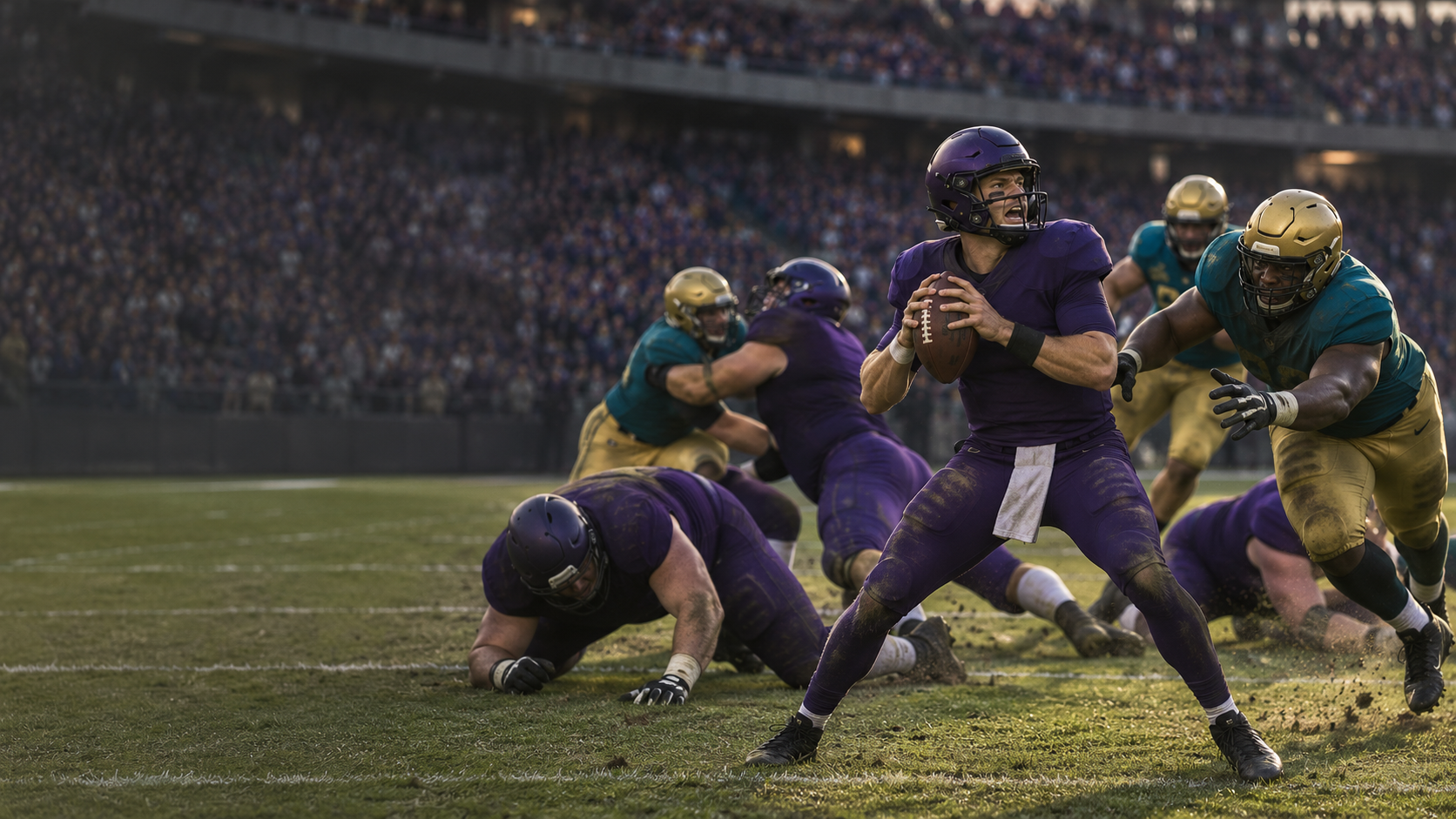
Why the NFL Trade Deadline Is Busier Than Ever
Why the NFL Trade Deadline Is Busier Than Ever
The NFL trade deadline has evolved from a quiet administrative date into a major roster-building checkpoint. The Pittsburgh Post-Gazette describes the deadline as substantially busier than in earlier eras, reflecting how teams now evaluate, build, and adjust their rosters during the season. Source 1
Modern deadline activity includes more than blockbuster trades. Teams pursue depth, salary management, future draft capital, and players who fit specific schemes. “Busier” can mean more completed trades, more reported negotiations, more proposed deals, and greater public attention.
The change is structural as well as strategic. Teams have better information about roster weaknesses, more clubs believe they remain in the playoff race, and front offices increasingly treat trades as ordinary roster management. Salary-cap planning determines whether many deals are practical, while constant coverage makes every potential move more visible.
The result is a second roster-building period. Contenders seek immediate help, rebuilding teams exchange veterans for future assets, and middle-of-the-pack clubs decide whether to buy, sell, or wait.
How the NFL Trade Deadline Changed
The deadline is now a strategic checkpoint
The first half of the season gives teams enough evidence to reassess their preseason plans. Coaches and executives can study quarterback performance, injuries, depth, scheme fit, playoff probability, and contract flexibility. A roster that looked balanced in August may reveal a clear weakness by the deadline.
Teams can distinguish temporary problems from structural ones. A struggling offense may need better protection or another receiving option. A defense may need help at cornerback, edge rusher, or safety. The deadline creates a clear decision point for adding contributors, testing the market, or selling veterans before their contracts expire or their value declines.
Teams no longer view midseason trades only as emergency responses. They use them to update the roster based on evidence gathered during the season.
Teams are more comfortable trading players
NFL trades were historically less common than transactions in some other major American sports. Complicated salary obligations, guaranteed money, bonuses, and scheme dependence made teams cautious. Organizations also hesitated to disrupt chemistry or admit that an offseason decision had failed.
That attitude has changed. Modern general managers are more likely to view a trade as a calculated adjustment rather than an admission of error. A trade can solve a short-term problem, provide information about a player before a long-term commitment, or improve a roster without starting a complete rebuild.
Reason One: Better Information Arrives Earlier
Analytics reveal weaknesses quickly
Teams now combine tracking data, film review, injury information, matchup statistics, and player-efficiency metrics. These tools do not eliminate uncertainty, but they make roster problems more specific.
Instead of concluding that a defense is struggling, a team can identify repeated failures against explosive passes. An offensive evaluation may show that receivers are not creating separation or that the line is allowing pressure on important downs.
That produces more targeted trade searches. A team may seek a cornerback who can handle fast passing offenses, a pass rusher who improves third-down pressure, a receiver who wins quickly off the line, or an offensive lineman who stabilizes protection.
The Los Angeles Rams’ reported interest in a cornerback illustrates this position-specific approach. The discussion focused on strengthening the secondary, not simply adding the biggest available name. The report described a potential need, not a completed trade. Source 3
More games create a larger evidence base
Four or five regular-season games can reveal more than training camp projections. Repeated coverage breakdowns, protection problems, limited receiver depth, and poor performance against a particular offensive style become easier to identify.
The deadline arrives after enough games have produced meaningful evidence but before the playoff race is settled. Teams still have time to benefit from an acquisition, while the standings offer a clearer basis for deciding whether to buy.
Reason Two: More Teams Believe They Can Contend
The expanded playoff race encourages buying
A crowded conference race can keep several teams within reach of a playoff position. That encourages more organizations to buy rather than wait for the next season.
Demand rises for starting-caliber defenders, reliable offensive weapons, veteran depth, and postseason experience. Even a flawed team may believe one addition can improve its chances enough to justify spending draft capital.
Contenders trade future resources for immediate production. Rebuilding teams trade current production for picks, young players, or salary flexibility. Both strategies increase the number of possible matches between buyers and sellers.
NFLTradeRumors.co’s “Five Trade Proposals For Contending Teams” illustrates this market. The scenarios involve teams seeking to strengthen their postseason position, but the proposals are hypothetical and do not confirm that the deals occurred. Source 9
Middle-of-the-pack teams create uncertainty
The most active teams are not always obvious contenders or sellers. Clubs in the middle of the standings must decide whether they are one starter away from a playoff run, whether an acquisition fixes a genuine weakness, and whether they can afford to surrender future draft capital.
These teams may become buyers after a winning stretch and sellers after several losses. A single game can change their view of the standings, prompting them to explore multiple paths. They may listen to offers for a veteran while also discussing a trade for an immediate contributor.
Reason Three: Front Offices Build More Flexible Rosters
Versatile players carry greater value
Versatility makes a player easier to deploy after the deadline. Defensive backs who play inside and outside, edge defenders who can rush and set the edge, receivers who line up in multiple positions, and offensive linemen who cover several spots can contribute without requiring a complete scheme change.
That flexibility matters because deadline acquisitions have limited preparation time. A versatile player can fill an injury vacancy, join subpackages, or rotate into a changing weekly role.
The Rams’ reported interest in a cornerback shows how a specific need can drive trade exploration. A team may need one player with the coverage skills and positional flexibility to correct a particular weakness rather than a complete defensive overhaul. Source 3
Injuries increase the value of depth
Injuries can change a team’s outlook within a single game. A season-ending injury may force a contender to seek a veteran, while multiple losses at one position can expose a weakness that backups cannot solve.
Deadline trades do not always replace stars. They often add functional depth, rotational defenders, or players capable of handling larger roles until injured starters return. League-wide injuries can also strengthen sellers’ positions when several teams need help at the same position.
Reason Four: Salary-Cap Management Is Central
Contracts determine whether trades are practical
Talent does not determine trade value by itself. Teams must examine remaining salary, guarantees, bonus allocation, contract length, future extension demands, and available cap space.
A less famous player with a manageable contract may be easier to acquire than a star with a major financial obligation. Trade negotiations therefore involve two evaluations: football value and financial responsibility. A team accepting more salary may offer fewer draft picks, while a seller retaining salary may receive a better return.
The deadline accelerates contract decisions
Teams must decide whether a player belongs in their future plans. A club may trade a veteran if it does not expect to re-sign him, if he blocks a younger option, or if it wants compensation before free agency.
The deadline turns an abstract future question into a concrete choice: keep the player, extend the player, or trade him while another team still values his services.
Reason Five: Rebuilding Teams Have Stronger Incentives to Sell
Sellers convert veterans into future assets
Rebuilding teams typically seek draft picks, young players, salary relief, and opportunities for prospects. A veteran may remain useful, but his value can be greater to a contender that needs immediate production.
Selling before the deadline can also prevent a team from losing a player for nothing in free agency. If an extension is unlikely, a trade may create value that would otherwise disappear.
The New York Jets’ “Trade Deadline Big Board” shows how a team can be viewed from both sides of the market. Coverage may identify realistic targets while also listing players the club could sell. Source 7
Buyers and sellers can both benefit
A contender gains immediate production, while a rebuilding team gains future flexibility. The player may gain an opportunity to compete for the postseason or receive a clearer role.
A rumored target or possible seller does not establish that a transaction occurred. Trade boards describe possible market activity, not confirmed outcomes. Source 7
Reason Six: The Market Is More Visible Than Ever
Rumor coverage amplifies activity
Fans must distinguish between completed trades, reported negotiations, team interest, media proposals, and speculation. These categories often appear together during deadline coverage.
Big boards, trade candidates, mock proposals, and position-specific recommendations can create substantial discussion before any team makes a formal move. Greater coverage does not mean every team is close to a deal; it means more possible transactions are analyzed publicly. Sources 7 and 9
Local reporting adds pressure
Local outlets frame potential trades around specific team needs. The Pittsburgh Post-Gazette’s discussion of Michael Pittman Jr. and the Steelers focuses on whether the receiver would address the team’s actual requirements. Source 5
A recognizable player may attract attention without solving a roster’s central problem.
The Michael Pittman Jr. Question: Name Recognition Is Not Enough
A potential acquisition should be evaluated through several questions: What role would the player have? Does he fit the quarterback and offensive scheme? What would the contract cost? What compensation would the other team demand? Is he healthy, available, and capable of contributing immediately?
The Pittman Jr. discussion is a useful case study. The question is not whether he is a good player, but whether he is the right player for the Steelers’ situation. Deadline decisions should measure marginal improvement rather than publicity. Source 5
The best trade addresses a specific weakness, fits the scheme, and improves the team enough to justify its price. That logic explains why position-specific trade exploration is more useful than general talent accumulation.
Why Some Trades Do Not Happen
Teams reject trades when the draft compensation is excessive, the contract is too expensive, or the player does not fit the scheme. A club may also decide that its playoff odds are too low to justify spending future resources.
Deadline negotiations are compressed. Teams must complete medical reviews, analyze contracts, agree on compensation, secure internal approval, and submit league paperwork. Uncertainty about health, finances, or role can stop a deal.
The deadline rewards preparation. Teams that know their priorities and limits can act quickly. Teams without a clear plan may allow the deadline to pass without making a move.
What the Busier Deadline Means
Contenders must balance immediate playoff value against long-term flexibility. The right choice may be a major trade, a smaller depth move, or no move at all.
Fans should evaluate trades by positional need, availability, contract terms, draft-pick cost, scheme fit, and expected playoff impact. A smart trade is not always the most popular one. An unheralded depth player may provide more value than a star who does not fit the offense or defense.
Conclusion: A More Aggressive NFL
The NFL trade deadline is busier because the league has become more precise, flexible, and willing to adjust during the season. Better information helps teams identify weaknesses. More clubs remain close enough to the playoff race to justify buying. Rebuilding teams have stronger incentives to sell veterans for picks and younger talent. Contract structures and versatile rosters make midseason integration more practical.
Media coverage amplifies every possibility. Reports about the Rams considering a cornerback, a Jets trade board, or hypothetical deals for contenders can generate substantial discussion without confirming that a transaction is imminent. Sources 3, 7, and 9
The deadline is now an extension of roster construction rather than a rare emergency event. More activity does not guarantee better decisions. The strongest teams are not necessarily the busiest; they are the most precise about which move improves their path to the postseason. Source 1
FAQ
Why has the NFL trade deadline become busier?
Teams have better performance data, more detailed evaluations of roster weaknesses, and greater confidence in making midseason moves. More clubs remain close enough to the playoff race to justify buying, while rebuilding teams can convert veterans into draft capital and younger assets.
What do NFL teams look for before the trade deadline?
Teams usually target specific needs such as cornerback, pass rusher, wide receiver, offensive line, or depth at an injury-affected position. Contract terms, scheme fit, health, and availability matter as much as talent.
Are all NFL trade deadline rumors based on active negotiations?
No. Coverage includes confirmed interest, possible targets, hypothetical proposals, anonymous reports, and media recommendations. Articles about Jets targets, contender trade proposals, or Rams cornerback needs should not automatically be treated as evidence of completed negotiations. Sources 3, 7, and 9
Why would a rebuilding team trade a good veteran?
A rebuilding team may not expect to retain the player long term. Trading him can produce draft picks, younger players, salary relief, and opportunities for developing players.
Why might a team reject a trade for a recognizable player?
The player may not solve the team’s actual weakness. The contract or draft-pick cost may be too high, or the player may not fit the team’s scheme or timeline. The discussion surrounding Michael Pittman Jr. shows why name value alone does not determine whether a trade makes sense. Source 5
Does a busier deadline mean teams are making better decisions?
No. More activity creates more opportunities but also more risk. A successful trade depends on fit, cost, contract structure, health, and the team’s realistic playoff outlook.